Solving Nasal Strip Failure with Custom Converting
Why is nasal strip application challenging?
If you’ve ever used a nasal strip product, you’ve likely realized that the bridge of the nose isn’t the easiest place to stick something to - it’s curved, oily, and home to sensitive skin.
Unlike other consumer wearable products like fashion or beauty tapes, the unusual topography of the nose makes nasal strips unique from both an application and manufacturing standpoint. This makes working with a contract manufacturing partner who understands these challenges and how to overcome them imperative.
Today, we’ll be taking a deep dive into what makes nasal strips such a challenge to apply, and how working with a skilled die-cutting and converting partner is key to overcoming these hurdles to manufacture products that stay stuck.
Let's jump into it...
Nose Bridge Geometry
Differential adhesion on 3d topography
Why is this a challenge?
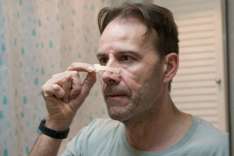
Nasal strips must conform to the complex three-dimensional curvature of the nasal bridge while resisting peel forces generated by talking, laughing, breathing, and other facial movements that cause the skin to stretch and contract. The nasal strip must also be rigid enough to provide the “spring-back” effect, which pulls the nasal passages open, but not so much so that it pulls the adhesive off the skin.
| Key Factor: Balancing skin-safe adhesion with mechanical stability and “spring-back resistance.” |
The JBC Converting Solution:
Using our in-line rotary roll-to-roll (R2R) multilayer laminating capabilities, JBC can combine two adhesives, one for gentle, skin-safe adhesion and one stronger for structural adhesion, into a single nasal strip footprint. This yields a functional nasal strip product that’s gentle enough to prevent skin irritation yet strong enough to resist the mechanical spring’s pull.
For your customers, this means receiving a functional nasal strip that stays in place through real-world wear while removing comfortably - improving user satisfaction and repeat use. And for you, the single-pass process helps reduce manufacturing time, cost, and variability as you scale.
Facial Skin Sensitivity
Biocompatible adhesion on sensitive facial skin 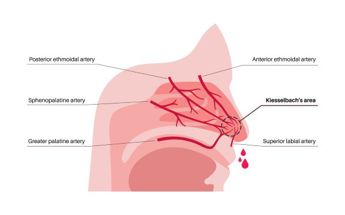
Why is this a challenge?
Skin on the nose is highly sensitive for a few reasons:
- High Vascularity: The nose is packed with a dense network of blood vessels, some very close to the surface. This means that the skin reacts quickly to irritants, fast-tracking inflammation.
- High Concentration of Sensory Nerves: Because the nose is a sensory organ, it’s packed full of nerve endings. This makes the nose extra sensitive to touch and other external stimuli.
- Thinner Dermis: When compared to other parts of the body, like the arm or leg, the nose has a very thin layer of subcutaneous tissue. This lack of padding makes the nerve endings much more sensitive.
| Key Factor: Gentle skin-contact adhesion that removes without irritation. |
The JBC Converting Solution:
JBC has years of experience working with industry-leading medical-grade adhesive suppliers like Solventum, Avery Dennison, and DermaMed, granting us access to a wide range of skin-safe adhesives designed to adhere to ultra-sensitive areas like the nose. Thanks to these relationships, JBC takes a vendor-agnostic approach towards adhesive sourcing, helping engineering teams evaluate gentle-release silicone and low-trauma acrylic adhesive options to find one that best fits their needs.
The result? More options for sourcing and testing medical-grade adhesives, quick access to sample materials, and greater price flexibility for biocompatible adhesives across different budget levels.
Explore more about skin-safe medical-grade adhesives here: Medical-Grade & Stick-to-Skin Adhesive Tapes
Skin Oils
Long-lasting adhesion in the "T-Zone" 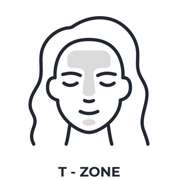
Why is this a challenge?
The nose falls under what is commonly referred to as the face’s “T-Zone”, an area with a higher concentration of active sebaceous glands (glands that produce skin oils) than anywhere else on the body. These oils can migrate into the adhesive over time, causing sliding and premature delamination.
| Key Factor: High adhesive sheer strength, tack, and moisture-vapor transmission rate (MVTR) |
The JBC Converting Solution:
JBC provides rapid prototyping services, allowing you to quickly conduct real-world wear studies to ensure the adhesive you’ve selected remains adhered to the oily surface of the nose. We work directly with material suppliers to get samples of medical-grade materials and make quick turnaround prototypes using our extensive digital cutting capabilities.
The result? A quick and cost-effective way to test different materials and part designs in real-world settings without any tooling investment.
JBC Technologies: Your Partner for Custom Nasal Strip Converting
As an ISO 13485 Certified medical contract manufacturer, JBC has years of experience helping medical and wellness brands convert their concepts into scalable realities.
With a diverse array of value-added die-cutting and converting capabilities, as well as strategic relationships with industry-leading material suppliers, JBC provides innovative solutions to a wide variety of critical industries, including medical and over-the-counter consumer wellness applications. Founded on the pillars of engineering innovation, manufacturing excellence, and supply chain optimization, JBC strives to provide value throughout the entire product lifecycle – from prototype to production.
Do you have an upcoming nasal strip project?