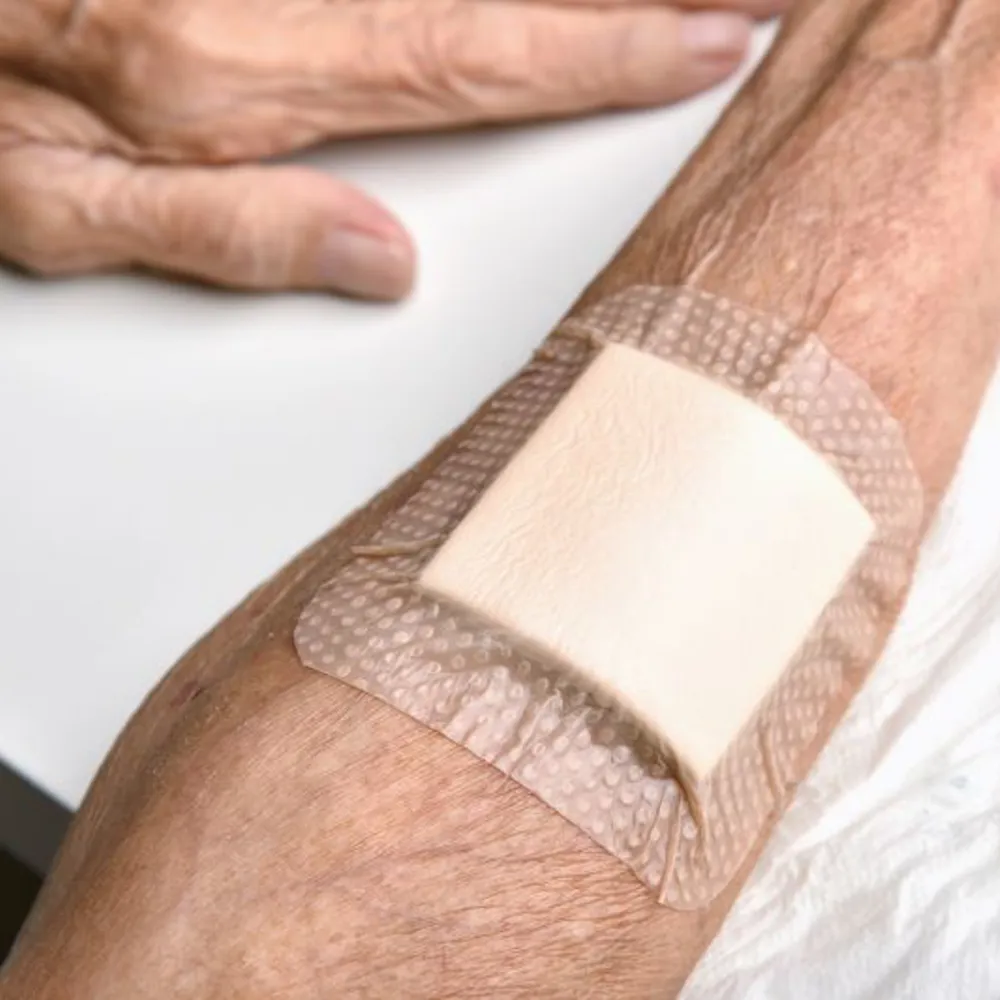
Die-Cutting For Advanced Wound Care & Securement
With four facilities, several cleanrooms, multiple state-of the art rotary die-cutting machines, and ancillary converting functions that range from laminating and slitting to printing and ultrasonic welding, JBC Technologies is your go-to supplier for custom die-cut Made-in-the USA disposable advanced wound care, IV dressing, and wound care securement products. Examples of die-cut wound care products we can support include transparent wound dressings, wound closure strips, and negative pressure wound therapy (NPWT) dressings.
As a Solventum Premier Converter, JBC Technologies has access to a diverse array of biocompatible, skin-safe medical-grade materials including hydrocolloid adhesives, low-trauma acrylic tapes, silicone adhesives, biocompatible polyurethane films, and much more.
Applications for Die-Cut Advanced Wound Care Products
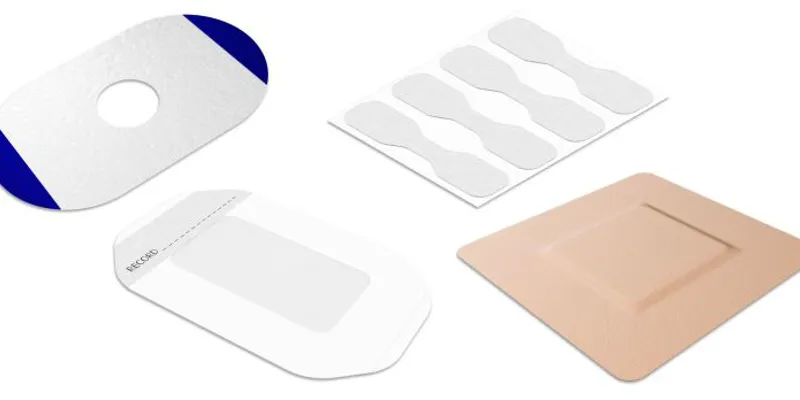
Using our process engineering expertise, state-of-the-art rotary die cutting equipment, compound die-cutting capability, and Class 8 cleanroom, JBC Technologies converts single and double-sided medical adhesive tapes, waterproof bandage tapes, hydrocolloids, nonwovens, spunlace, meltblowns, polyesters (PET), medical grade foams, films, and other flexible materials into a variety of medical disposables, including the advanced wound-care products listed here.
- Transparent wound dressings
- IV dressings
- IV securement patches
- Wound closure strips
- Silicone foam dressings
- Negative pressure wound therapy (NPWT) dressings.
- Cover tapes for wound dressings
Common Advanced Wound Care & Dressing Materials We Convert
A Guide to Selecting the Right Biocompatible Skin-Contact Materials
There are a host of things to consider when choosing a skin contact adhesive for a die-cut wound care product, and at JBC Technologies, we partner with some of the best medical tape and adhesive manufacturers in the industry. We are proud to be a Solventum Premier Converter and an Avery Dennison AdVantage converter. We also have strong relationships with DermaMed Coatings, Mactac, Adhesives Applications, Flexconn, and others – all of whom help us to help you identify the materials that will provide the most value to your end product.
Use the guide below to match possible skin-contact material combinations to the real-world wound-care challenge you’re trying to solve.
I need material for: |
Consider: |
Key Performance Factors |
Best for: |
Long-term multi-day wear without skin irritation |
Low-trauma acrylics + Polyurethane (PU) films
Example: Polymer Science PS-2480 |
|
Transparent IV site dressings, long-term sensor patches |
Short-term wear with trauma-free removal for highly sensitive skin |
Silicone adhesives + Spunlace nonwovens
|
|
Neonatal dressings, geriatric wound care, frequently changed dressings, coverage over high-movement joints |
Fluid management to prevent skin maceration and secure adhesion on high-exudate wounds or moist skin |
Hydrocolloid island + Polyurethane (PU) Film + Low-trauma acrylic edge seal
Examples:
|
|
Blister bandages, ostomy care, advanced wound care for pressure ulcers, island dressings |
Repositionable adhesion on low-surface-energy substrates |
Silicone adhesives + Rigid PET films
Example: Avery Dennison AVERY PET |
|
Catheter and IV tube securement, post-surgical scar management strips, Negative-pressure wound therapy (NPWT) vacuum drape border seals |
Ask an Engineer: Wound Care and Securement FAQs
At JBC, we take a vendor-agnostic approach to sourcing skin-safe wearable medical adhesives, meaning we work with many different industry-leading medical-grade material manufacturers to source the material that’s right for your unique application. We’ve sourced materials from Solventum, Avery Dennison, DermaMed, Flexcon, Mactac, Vybond, Adhesive Applications, and more!
JBC Technologies is proud to be both a Solventum Premier Converter and an Avery Dennison ADVantage Converter!
Yes, JBC Technologies can manufacture custom island dressings. Using our in-line island placement and vertically integrated rotary die-cutting capabilities, we can strategically place highly absorbent hydrocolloid adhesives in the center of a larger adhesive-backed film component. The result? An advanced wound care solution that enables a healthy healing environment in the center over the actual wound, with a waterproof PU film backing and a biocompatible, skin-safe acrylic adhesive edge-seal to keep out moisture and other contaminants.
JBC provides ISO 13485 Certified manufacturing solutions to the fabrication of components that meet many advanced wound care challenges, including:
- Hydrocolloid island dressings
- Polyurethane foam dressings
- Transparent film dressings
- Negative pressure wound therapy (NPWT) drapes
- NPWT fixation & securement
- Peripheral IV dressings
- CVC & PICC line securement
- Catheter & IV securement
- Surgical closure strips
- Ostomy care
There’s no one-size-fits-all adhesive for advanced wound care applications. Selecting the right skin-safe adhesive depends entirely on the desired outcomes of your product:
- Hydrocolloids are seen more in advanced wound care applications and island dressings. They provide a highly absorbent layer over the wound to manage exudate, moisture, and promote healing. However, they’re commonly combined with a low-trauma acrylic adhesive to provide necessary edge-sealing and barrier protection to prevent moisture from entering or exiting.
- Low-trauma acrylics are most commonly used for wound care securement on peri-wound skin. As mentioned above, these adhesives act as a securement layer (or frame) to lock the wound dressing down and seal out bacteria, moisture, or other contaminants. Acrylics are commonly chosen for their affordability and durability over longer-term wear, at the cost of repositionability and atraumatic removal on sensitive skin.
- Silicone adhesives serve two primary purposes in wound care and securement. They are often used as extra-gentle securement frames for island dressings placed on highly sensitive skin, offering gentler removal and higher repositionability than acrylics. They can also be used as a non-stick contact layer between an absorbent pad and the wound itself, preventing the wound care pad from sticking to the per-wound skin when removed and delaying the healing process. Because silicone adhesives are hydrophobic, they form a gentle bond with the peri-wound skin, without sticking the wound itself.
Working with a U.S. based domestic converting partner helps our customers avoid many of the headaches involved with overseas sourcing. Look to JBC for:
- Faster, more secure supply chains
- Insulation from global disruptions and tariffs
- More consistent quality & traceability
- Increased responsiveness & control
Learn more about what working with a U.S. based converter means for you!
As an ISO 13485 Certified and FDA Registered Converter, JBC takes many precautions to ensure consistent quality for high-volume runs of advanced wound care products. From multiple ISO 8 (Class 100,000) cleanrooms and clean assembly space to statistical process controls (SPC) and inline vision quality systems, JBC is committed to manufacturing excellence at every turn.
Here are just a few of the many material partners we work with:




We also work with customer supplied material. If you have material that you need converted, please reach out to your sales representative or contact us for additional information.
Learn More About What JBC Technologies has to Offer
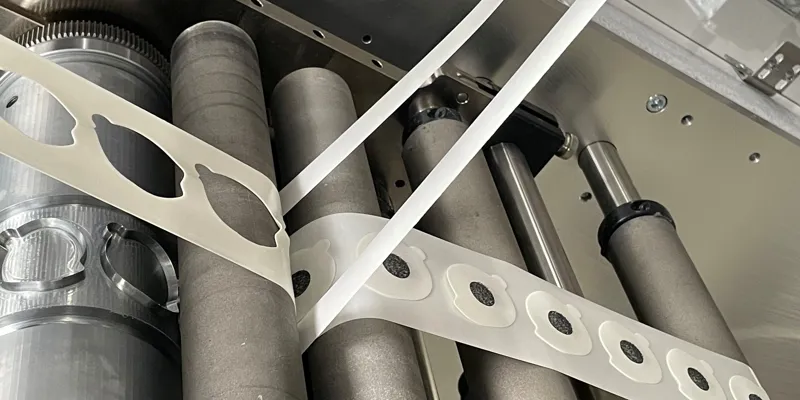
Scaling Complex Multi-Layer Components With Precision and Reliability Multi-Station Rotary Die-Cutting

JBC's fleet of multi-spindle rotary die-cutting machines is a core part of our commitment to manufacturing excellence, allowing us to fabricate thousands of dimensionally identical multi-layered components repeatably at high-speeds.
With machines ranging from 5-18 stations and a variety of inline capabilities like laminating, printing, ultrasonic welding, island placement, and more, our rotary die-cutting capabilities are critical to our "one-pass-approach" to manufacturing, helping us get more done in a single machine pass.
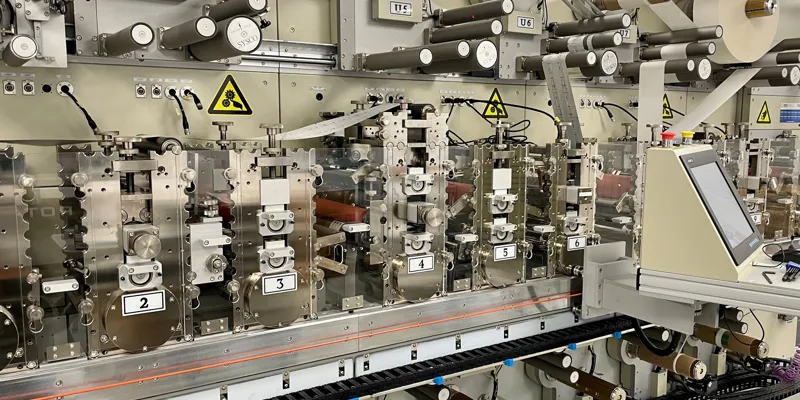
ISO 13485 Certified Cleanroom Die-Cutting
JBC is home to multiple ISO 8 / Class 100,000 Certified cleanroom manufacturing environments, each featuring high-volume rotary die-cutting and flexible materials converting equipment.
Our clean rooms have been carefully designed to meet the strict standards and quality requirements of the highly specialized industries that require that their parts be made in a low air particulate, temperature- and humidity-controlled, and sanitary environment, like the medical, consumer wellness, aerospace, and electronics industries.
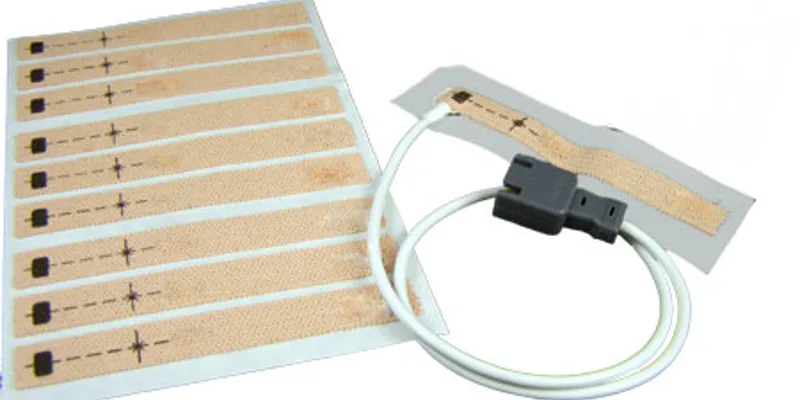
Medical-Grade Adhesives
As with their industrial and automotive counterparts, medical-grade adhesive tapes can be categorized in multiple ways - carrier type (foam, woven non-woven, polyurethane non-woven, spunlaced polyester nonwoven, film, paper, etc.), adhesive type (medical-grade rubber, acrylic, silicone), and construction (double-sided with or without differential adhesive, single-sided, transfer tape, etc.). Your specific application will determine which type of medical-grade pressure-sensitive adhesive tape you need.
Partner with a Leading Medical Die Cutter
Why Choose JBC for Your Wound Care and IV Dressing Products
Die-cutting for wound care applications requires precision, consistency, cleanliness, and strict quality standards. JBC Technologies delivers on all four, and then some. Leveraging our clean room and inline vision systems along with our rotary and compound die cutting expertise we consistently fabricate complex parts that meet the high quality standards of our customers.
We will work with you from the early stages of product design, assisting with material selection, prototyping, and design for manufacturability to high volume full production runs.
Capabilities include island placements, multi-layer laminations, lift/pull-tabs, printing, ultrasonic welding, kitting and packaging... and more.