
Die-Cut Components for Satellite & Space Applications
With years of experience supporting the space industry’s largest players, JBC Technologies consistently transforms complex designs into flight-ready custom die-cut parts that solve critical satellite challenges associated with brightness mitigation, thermal management, electrical insulation, and more.
JBC provides agile engineering and rapid-iteration support for mission-critical satellite components by leveraging vertically integrated converting capabilities and 3M™ Preferred status to convert high-performance flexible materials, like low outgassing adhesives, Kapton®, and Silver-inconel-coated FEP films into components that help New Space OEMs & Innovators get their constellations to orbit faster.
Look to JBC for support with:
- Rapid prototyping for fit, form, and function testing
- Bridge-to-production runs
- High-volume constellation component manufacturing optimized for automated assembly
Precision. Speed. Scale: Built for the New Space Economy
At JBC, we've found that constellation hardware and part designs can change frequently, especially in the early stages of a program. We know we must react seamlessly to revisions and quickly incorporate new design updates. We maintain agility through a combination of tooling and process flexibility and close engineering collaboration.
Know that when you work with JBC, you can move faster and with less risk from complex CAD to prototype to high-volume production.
Count on JBC for:
-
Material selection and design for manufacturing support
-
Good, better, best production scaling and part presentation recommendations
-
High volume production runs, with consistent, precise tolerances throughout
-
Automated assembly
-
Process control
-
Lot traceability
-
Value Analysis/ Value Engineering
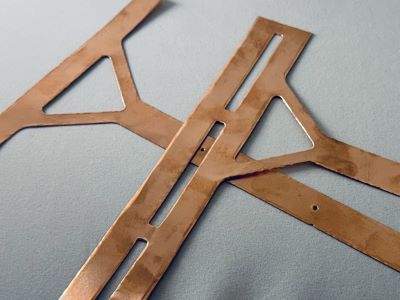
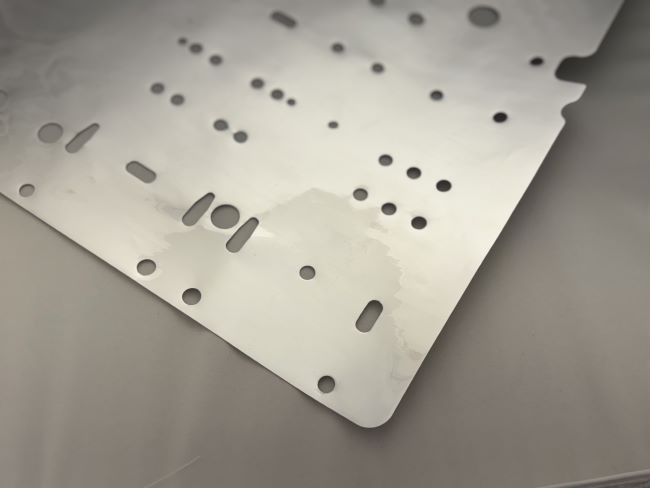
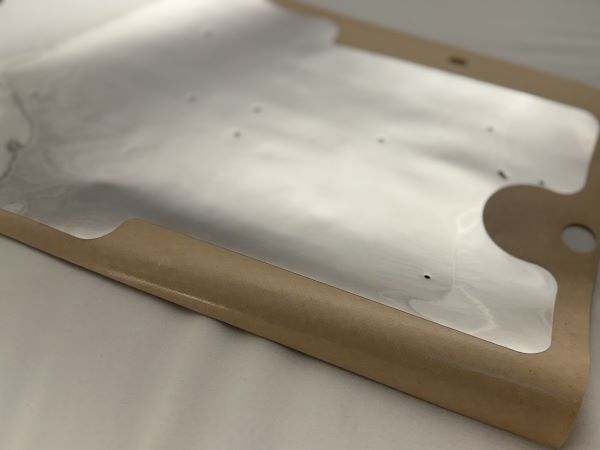
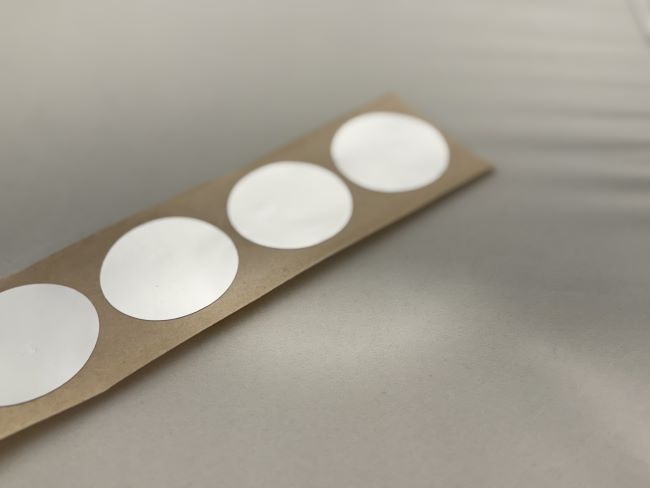

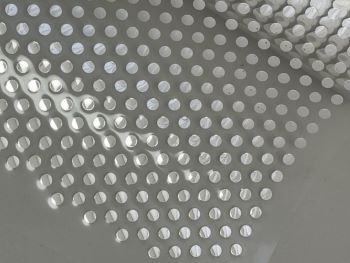
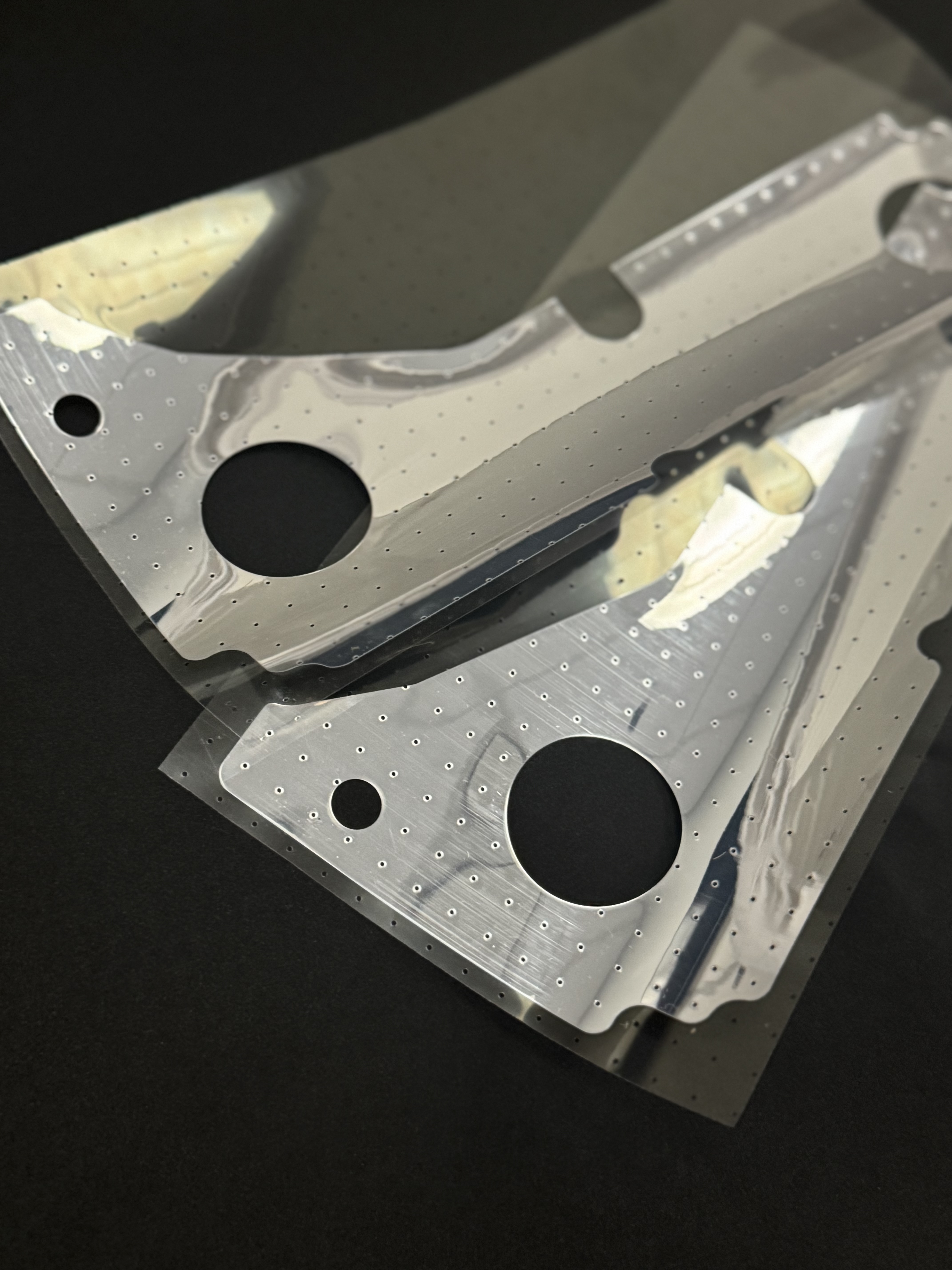
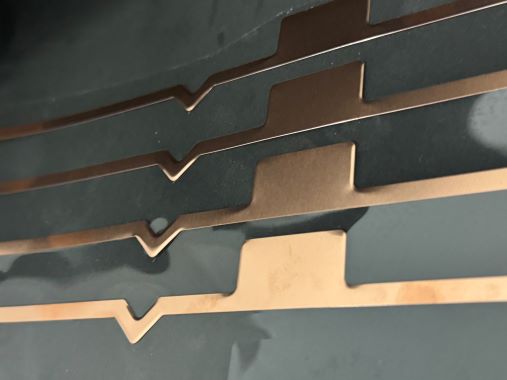
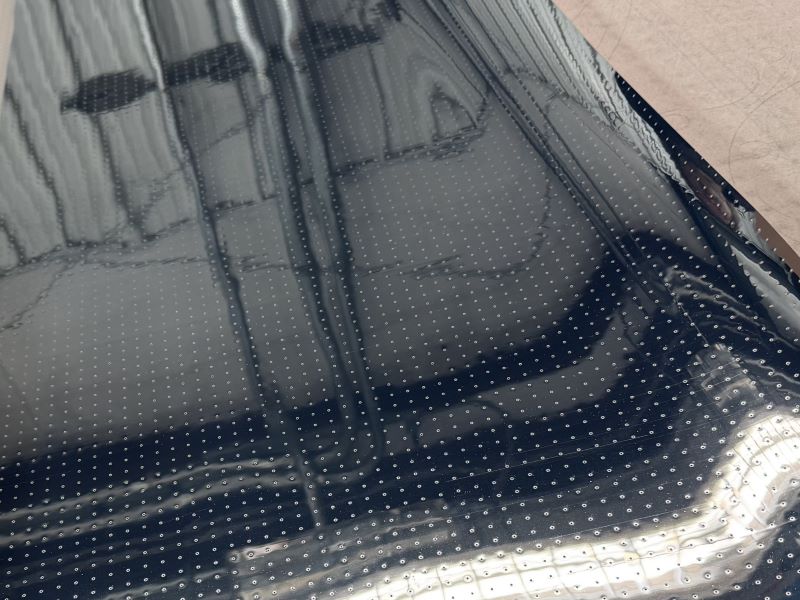
Custom Parts for Critical Space and Satellite Applications
Below are common application areas where our converting and die-cutting capabilities are used to solve specific satellite and space hardware challenges.

New Space & SmallSat LEO Constellations
-
Parts optimized for automated assembly
-
Silicone-based thermal gap fillers and pads
-
EMI/RFI shielding gaskets and tapes
-
Aluminized FEP films with specialty coatings
-
Custom die-cut insulator films (e.g., Kapton® polyimide tapes)
-
Vibration damping pads
-
Specialized battery components

Large Scale & Traditional GEO/MEO Satellites
-
Large-format thermal interface pads
-
Heat-spreading graphite gaskets
-
Die-cut low-reflectivity foils or anti-reflective films
-
Solar array insulators
-
EMI/RFI shielding components
-
Copper current collectors
-
Low outgassing silicones & adhesives
-
Silicone adhesives

Ground Segment & User Terminals
-
Thermal gap pads
-
User terminal 3M VHB™ (Very High Bond) tapes
-
Mounting tapes and “Radome Stickers”
-
EMI/RFI shielding tapes for ground electronics
-
Hydrophobic radome laminated films
-
Cushioning and vibration pads
-
Radome seals and gaskets
-
Antenna element insulators
Low Outgassing and Space Grade Materials
Highly specialized die-cut materials that can survive the harsh vacuum of space
Space is not a friendly place for materials - temperatures fluctuate dramatically, parts corrode quickly, and some materials release harmful chemicals when exposed to the vacuum of space.
Through our rich supplier network, JBC Technologies die-cuts and converts a wide array of highly capable, specialized materials designed specifically to perform in demanding space applications. Explore the table below for some examples of space-grade materials we convert that solve specific satellite & space challenges:
Category |
High-Performance Materials |
Primary Applications |
|---|---|---|
|
Brightness Mitigation and Thermal Control: to reflect solar radiation while allowing internal heat to escape |
|
Protective and Barrier Films |
|
Environmental Shielding: UV protection, chemical resistance, and radiation shielding for external components. |
Space-Grade Adhesives |
|
High-Reliability Component Attachment & Thermal Shielding Assembly to provide high-bond strength for laminating Specular Reflective Films and Protective Barrier Films (such as FEP, PTFE, and ETFE) to satellite structures. |
Conductive Foils and Collectors |
Copper Foil |
EMI/RFI shielding and power distribution |
Thermal Interface Materials (TIMS) |
|
Heat Management: Conductive bridges for heat dissipation from PCBs to chassis; vibration damping for sensitive optics. |
Here are a few of the industry-leading material manufacturers we've worked with over the years:
We also work with customer-supplied material. If you have material that you need converted, please reach out to your sales representative or contact us for additional information.





JBC’s Satellite Converting Toolkit
The vertically integrated capabilities that enable us to support satellite innovation

Rotary Die Cutting

Ideal for high-volume parts optimized for automated assembly
- Up to 24” wide
- Inline printing available
- Kiss Cutting
- Island Placement

Clean Manufacturing
When contamination control and particulate count matter
- ISO Class 8 Specific Rooms
- Additional Clean Manufacturing Space
- Strict monitoring and measuring
- Rotary Die Cutting, Kitting, Packaging
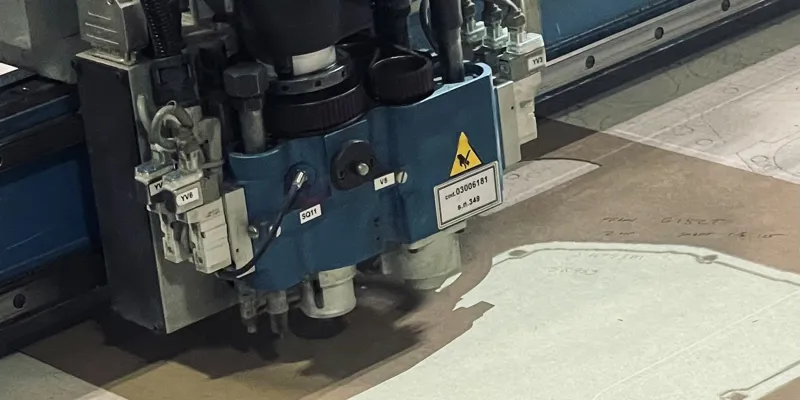
Rapid Prototyping
Ideal for quick-turn parts to test fit, form and function
- Laser
- Waterjet
- Reciprocating Blade
- Manual Die-cutting Presses
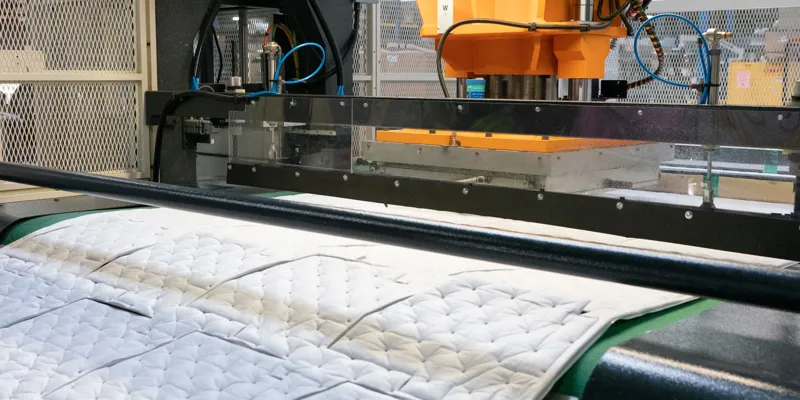
Large Parts Die Cutting
Large parts for large applications
- Digital cutting up to 70” x 220”
- Flatbed die cutting up to 72”
- 48” Traveling head, beam, belt-fed, manual
- Multi-cam CNC router

Laminating
Ideal for creating multi-functional material stacks
- Up to 74” wide
- Hot Roll
- Cold Pressure
- Inline Rotary

Process Engineering Innovation
Optimizing production and processing through:
- Design for Manufacturability and Assembly (DFMA) Support
- Material Selection Assistance
- Value Analysis/Value Engineering

Manufacturing Excellence
Optimizing yield, compliance, and process stability through:
-
- Vertically Integrated Converting Capabilities
- ISO Certified Quality Systems
- Cleanliness & Contamination Control
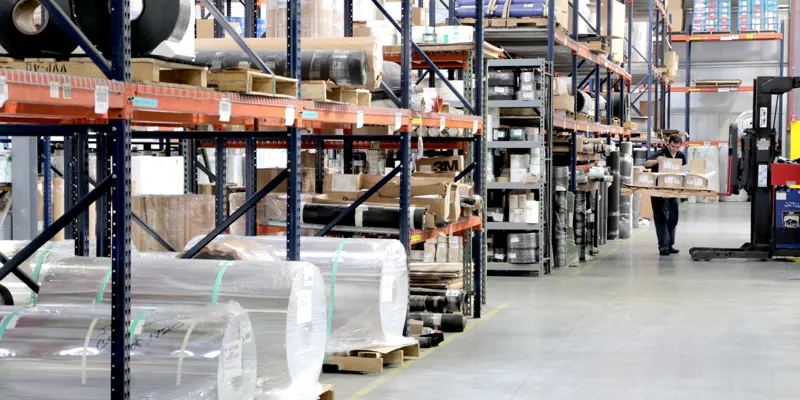
Supply Chain Optimization
Streamlining customer supply chains through:
- Vendor Agnostic Material Sourcing
- Optimized Part Presentation
- Vendor Managed Inventory
ASK A DIE CUTTING EXPERT: Answers to Frequently Asked Questions
Absolutely! As a long-term supplier to one of the world’s largest satellite manufacturers, we understand the need to move quickly and work collaboratively. This only happens when open and honest communication is prioritized.
Reflective satellite materials, such as metalized films, thin foils, laminated FEPs, copper stacks, are extremely sensitive to tooling, pressure, and web handling. JBC routinely converts these materials in production, not just prototypes. Our engineers understand how blade geometry, die offset, liner compressibility, rewind direction, and material displacement affect edge quality, curl, and downstream bonding; allowing us to run materials many shops turn away.
Satellite component prints rarely capture converting realities. JBC engages early to assess whether a design will actually run; lamination sequence, edge stability, curl risk, tolerance stack-up, and yield. We regularly recommend geometry tweaks, tooling strategies, or material/liner changes that prevent feed issues, bonding failures, or rework; before parts ever hit the floor.
Yes. JBC designs parts for assembly efficiency, not just geometry. Common approaches include kiss‑cut parts on rolls for automation, controlled rewind direction for consistent edge referencing, extended or split liners for clean peel, and pull tabs sized for gloved or tool-assisted handling. These features reduce handling, protect delicate reflective surfaces, and improve takt time.
At JBC Technologies, we begin with the end in mind. We use laser/digital cutting for early prototypes so you can iterate quickly. In parallel, we collaborate on your long-term production goals, optimizing web direction, part spacing, and material performance, while validating the tooling requirements of rotary die cutting to enable a smooth transition to press-ready layouts and scaled production.
Yes. At JBC, we pride ourselves on our vertically integrated converting capabilities. We have digital and manual die-cutting options for low-volume/high mix prototypes and parts, as well as dozens of rotary and flatbed presses that support high-volume production.
Yes, at JBC Technologies, we do offer low-cost/no-cost tooling options. The tooling required for the manual die-cutting presses we referred to in the last question is relatively inexpensive and can be made in the span of a few days, not weeks. The digital presses do not require tooling at all – hence the “no cost” tooling.
There are several answers to the question of why high speed rotary die cutting is ideal for high volumes of precise identical parts: first, the process employs very precisely machined dies so part geometry does not drift, second, servo drives and closed loop tension control systems can be used to maintain precise alignment between the tool and the material, and third we can add inline vision systems that measure parts and detect defects as they are being produced.
Yes. Thin reflective films are highly sensitive to web tension, die strike energy, and material recovery after cutting. We control distortion by tuning hit depth, blade geometry, and press dynamics to minimize in‑plane stress during the cut. Where needed, we also recommend tolerance strategies that reference functional features, bond lines, optical edges, or interfaces, rather than cosmetic outlines, which improves real‑world performance without unnecessary scrap.
Curl typically originates from asymmetric material stacks, adhesive placement, liner stiffness, and stored strain from winding. We address this holistically: balancing laminate constructions where possible, selecting liners with appropriate modulus, cutting in the direction that minimizes stress relief, and tightly controlling rewind tension and orientation. These steps ensure parts lay flat during downstream bonding and don’t fight operators or automation during assembly.
Yes. We routinely convert customer‑owned, proprietary, and early‑development materials, including films, foils, and coated substrates that may not yet have stable datasheets. Our focus is on defining a safe and repeatable process window—cut depth, pressure, speed, and handling—without altering the material chemistry or surface condition critical to your application.
Particulate control is driven by cutting method, blade condition, liner selection, and material handling, not just environment. We manage blade wear and geometry to reduce shear debris, avoid over‑penetration that generates fines, and select liners that minimize fiber or silicone transfer. When required, we route parts through cleanroom manufacturing and inspection protocols suitable for sensitive satellite hardware.
Yes. We frequently laminate reflective, thermal, electrical insulation, bonding, and EMI shielding layers into a single die‑cut assembly. This approach reduces part count, stack‑up variation, and touch labor, while improving consistency at build. The result is a lighter, more repeatable solution with fewer opportunities for assembly error.
We flag it immediately and explain why, whether it’s feature spacing, corner geometry, tolerance overlap, or material behavior. We then propose alternatives that preserve function while improving yield and robustness. This keeps programs moving forward without late‑stage surprises or unplanned redesigns.
We document process assumptions, tooling intent, and known sensitivities from the start. When revisions occur, updates build on validated learning rather than resetting to zero. This is especially important in satellite programs where early iterations can move quickly but must still converge toward stable high‑volume production.
We lock critical variables, tooling, liners, material specifications, offsets, inspection methods, and control limits, and actively monitor for drift. This ensures part‑to‑part and lot‑to‑lot consistency across thousands or tens of thousands of units.
Process selection is driven by material response, edge quality requirements, cleanliness expectations, tolerance sensitivity, and production scale. We often evaluate multiple cutting methods early to confirm which approach delivers the best balance of performance, yield, and scalability; not just what works once.
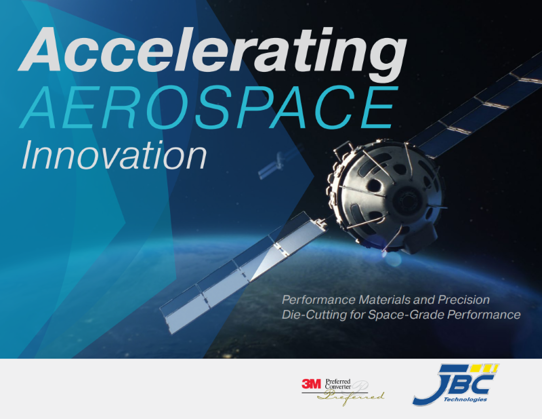
Accelerating Aerospace Innovation:
Performance Materials and Precision Die-Cutting for Space Grade-Performance
We worked with 3M™ to put together this helpful E-Guide, which explores how engineered performance materials and custom die-cutting help accelerate aerospace innovation and solve a range of critical satellite challenges.
Throughout the E-Guide, you'll learn:
- How innovative 3M™ materials solve a range of satellite and space challenges, including brightness mitigation and electrical insulation
- How to implement design for manufacturability considerations to improve cost and scalability
- How to schedule a customized Solutions Seminar™ with JBC Technologies and 3M™
Partner with JBC Techologies for Agile Satellite Manufacturing Support
Founded on the pillars of engineering innovation, manufacturing excellence, and supply chain optimization, JBC Technologies believes in following the mantra of “Failure is only a solution yet to be defined” - a key tenet of the “Fail Fast” mentality of new space innovation.
JBC strives to add value throughout the entire product lifecycle, from material sourcing and rapid prototyping/design support to optimized automation-ready high-volume manufacturing. We’re committed to delivering quality, agility, and precision from the first component to the millionth.