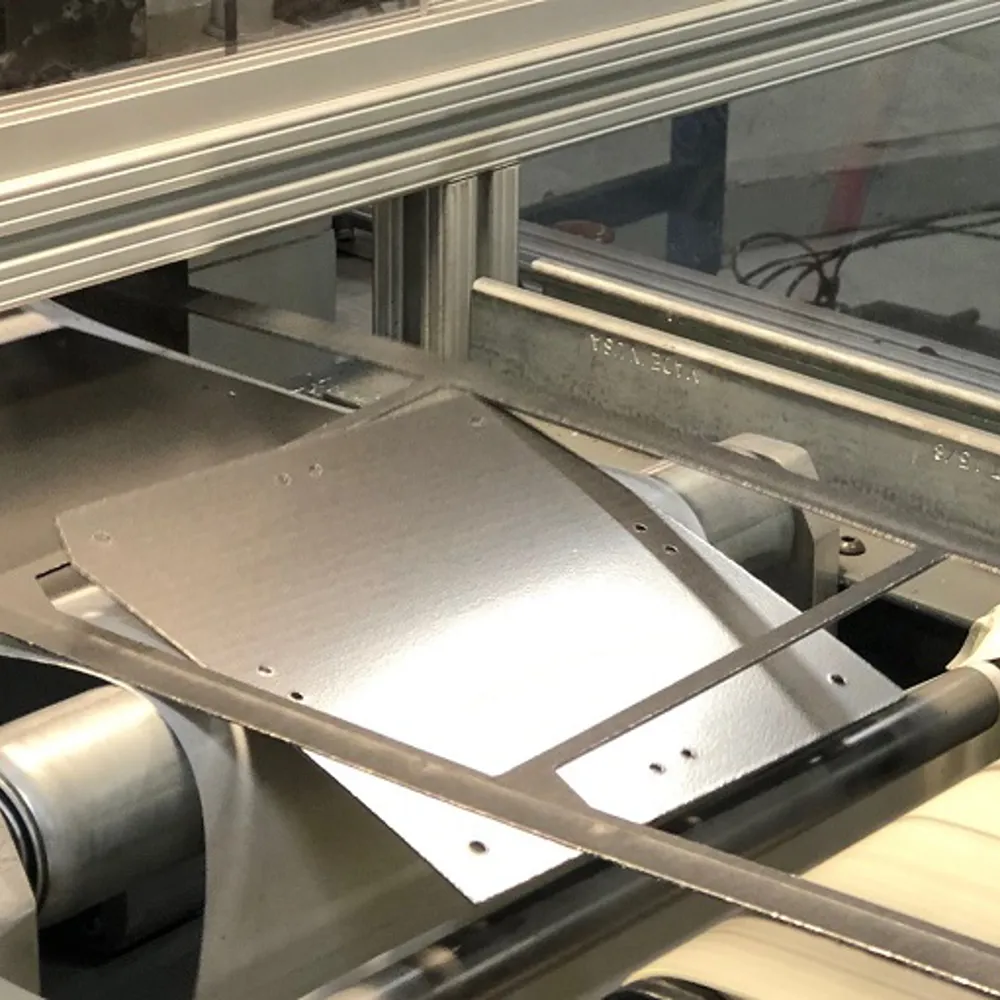
Insulate, Isolate, and Spread Heat with Die-Cut Thermal Management Components
JBC Technologies converts engineered thermal materials into production‑ready, precision die‑cut components that isolate, insulate, and spread heat. Backed by ISO 9001:2015 quality and with deep expertise in fabricating complex, multi‑layer constructions, we supply leading organizations in the medical, aerospace, ESS, and industrial markets.
As a 3M Preferred Converter, Avery Dennison ADVantage Converter, and Rogers Major Converter, we are recognized as one of the best die-cut solutions providers in the industry.
Do you have a thermal management challenge that can be solved by custom die cutting?
What is Die-Cut Thermal Management?
Die-cut thermal management is the process of converting engineered materials—such as gap pads, graphite spreaders, and thin-film insulators—into precision-engineered components that control heat flow. These passive thermal solutions are designed to dissipate excess heat, distribute heat evenly across surfaces, or isolate sensitive components from radiant and conductive heat.
The Role of the Precision Converter
By leveraging engineered thermal materials—both heat-transfer solutions (TIMs, spreaders) and heat-blocking solutions (insulators, barriers)—engineers can manage temperatures and protect heat‑sensitive components in high‑density electronics. A precision converter like JBC Technologies adds value with application‑specific converted parts:
-
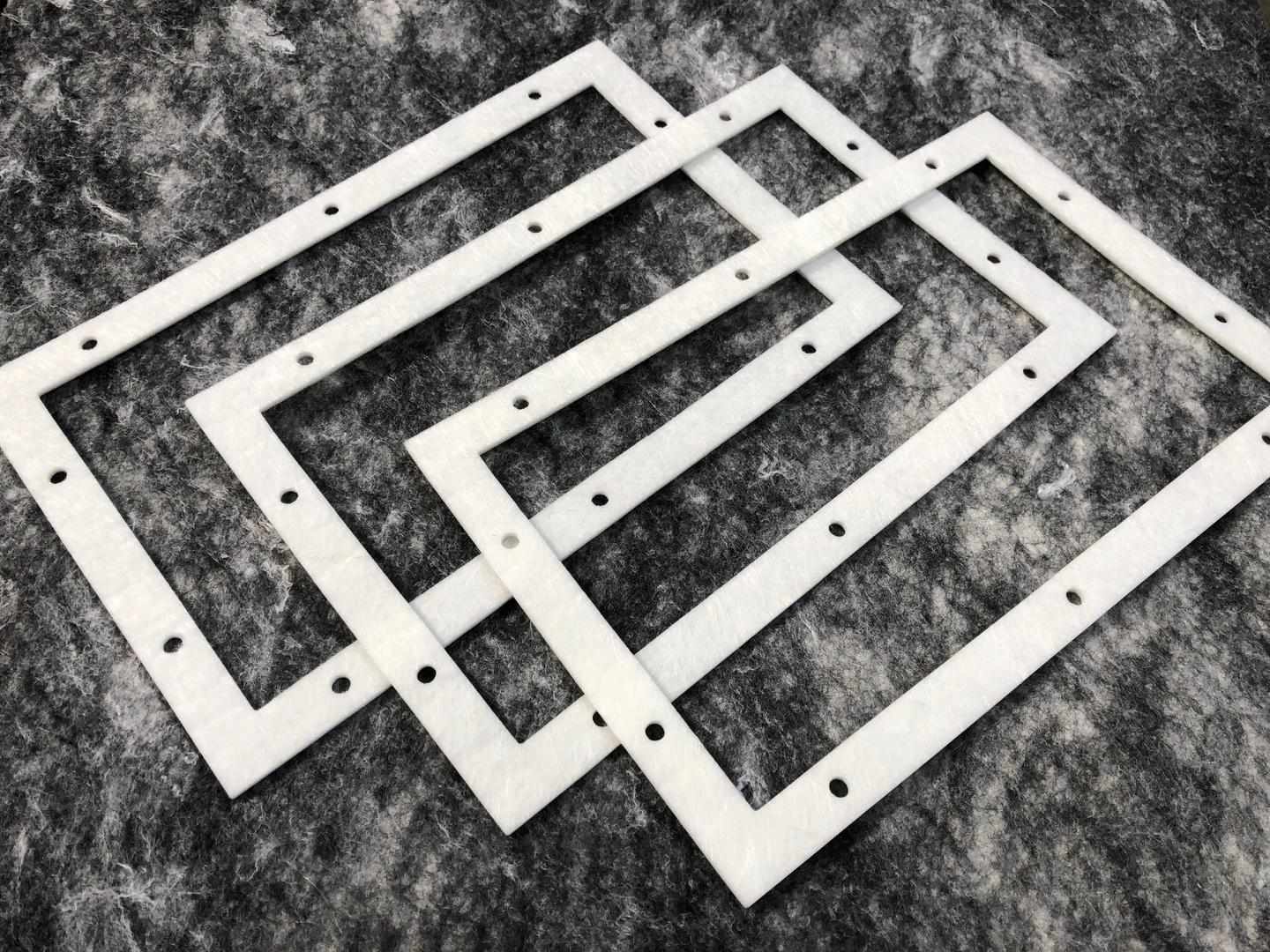
Multi-layer thermal laminates: Conductive or insulating layer stacks (TIM/spreader or barrier) with dielectric isolation, PSA attachment, and optional conductive layers for consolidating functions into one part and simplifying assembly.
-
Tight-tolerance die-cut parts + kitted presentation: Repeatable parts in the required footprint, delivered on liners/rolls or in kits for faster placement, reliable fit, and reduced line variability.




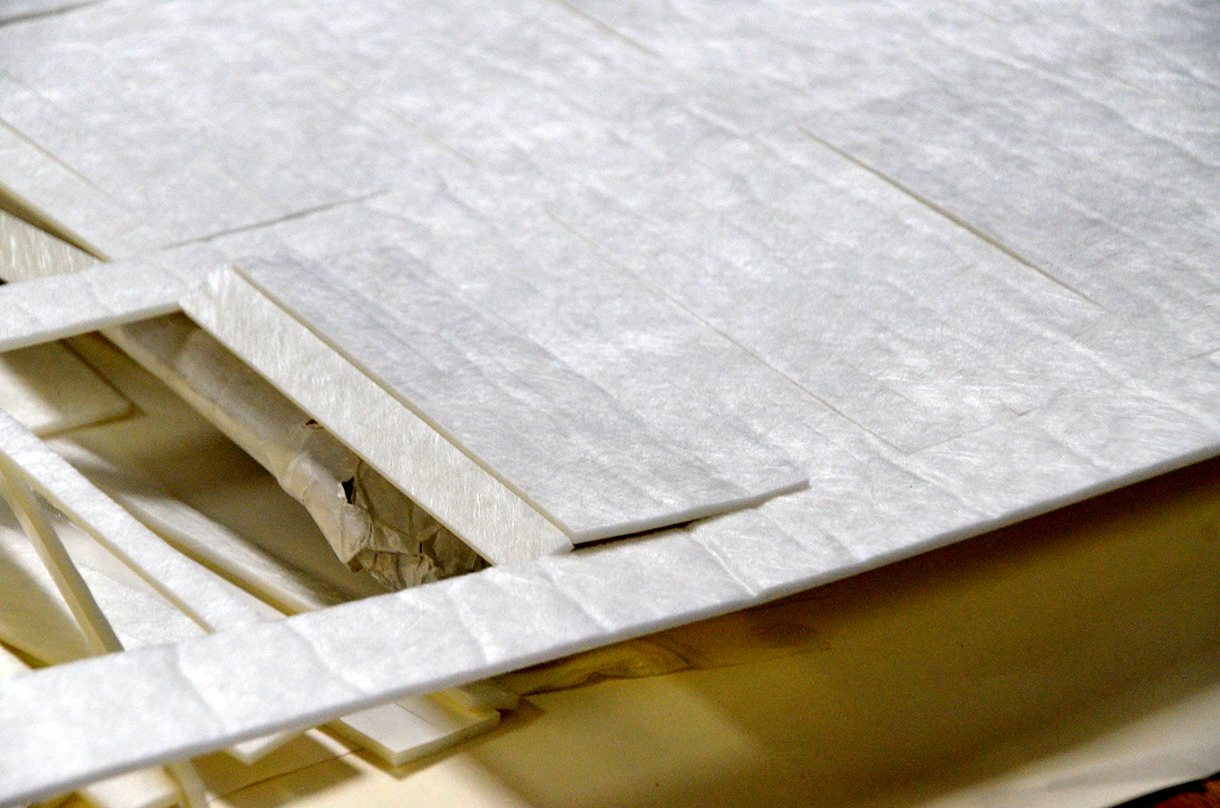
Why Engineers Choose JBC for Thermal Converting
Material Science + Value-Added Custom Converting
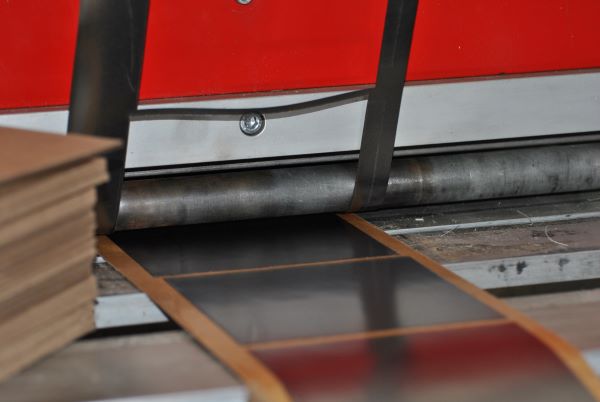
JBC Technologies customers benefit from our strong focus on the three pillars of Engineering Innovation, Supply Chain Optimization, and Manufacturing Excellence. Our vertically integrated converting capabilities range from precision die-cutting (rotary, platen, and laser) plus inline/offline lamination and PSA integration to build production-ready thermal parts, from prototypes through high volume.
Industry Focus |
Key Engineering Challenges |
Common Materials |
The JBC Converting Edge |
|---|---|---|---|
Thermal Runaway & Power Density: Mitigating cell-to-cell propagation, managing hotspots in ADAS/Power electronics, and balancing compression with NVH. |
|
|
|
Orbital Extremes: Managing vacuum outgassing, extreme thermal cycling (LEO/GEO), and radiative solar loads with ultralight mass. |
|
|
|
Weight & Reliability: Achieving high-performance heat shielding and sensor isolation in high-vibration, ruggedized environments without added weight. |
|
|
|
Thermal Regulation and High-Volume Integration: Managing and dissipating heat in tight electronics enclosures while maintaining rapid, error-free assembly |
|
|
Die- Cut Thermal Management Applications for Demanding Industries
The table below references just a few industry-specific applications for die-cut passive Thermal Management products...

Satellite & Space
- Thermally conductive adhesive films for bonding and heat spreading.
-
PCB- and component-level gap pads to couple heat into housings, chassis, or dedicated heat spreaders.
-
Die-cut polyimide and ceramic insulation to reduce conductive and radiative heat soak.
-
Interfaces or insulators within battery thermal strap assemblies to reduce peak temperatures and improve cell-to-cell temperature uniformity.

-
Thermal gaskets and gap pads for ground support equipment (GSE) launch control electronics, mobile radar trailers, and diagnostic test sets.
-
Die-cut gap pads and heat spreaders for ruggedized ground vehicle electronics (vetronics).
-
Gaskets and shields for sensor and antenna thermal isolation to reduce heat soak and improve stability.

-
Thermal runaway propagation barriers to support UL compliance and fire containment.
-
Module-to-cold-plate thermal coupling for maintaining low thermal resistance in long duty cycles.
-
Hotspot spreading (PCS, busbars, terminals) for stabilizing performance in power-dense zones.
-
Outdoor enclosure sealing & airflow control to protect cooling paths and support UL-driven enclosure integrity.

-
Custom-fabricated heat spreaders to reduce hotspots in camera or radar modules.
-
Thermally conductive tapes/pads and dielectric insulators for headlamp and other assemblies to protect plastics and optics while reducing thermal resistance.
-
Foil-faced insulation barriers for under hood heat shielding to protect sensitive equipment from radiant heat.
-
Die-cut thermal interface pads and electrical isolation films to improve heat transfer while maintaining dielectric safety.

- Die-cut thermal components for EV battery packs and power electronics for heat spreading, insulation, sealing, and thermal-event mitigation
-
Multifunction pads for cell-level compression and thermal control.
-
Lid gaskets and thermal insulation to protect against ingress and heat exposure.
-
Multi-layer barrier laminates for cell-to-cell and module-to-module separation to slow heat transfer and limit propagation.
-
Seals and gaskets for vents, covers, and service features to maintain ingress protection and manage fault-gas pathways.

- Die-cut insulation, heat shields, and seals for industrial equipment and appliances
-
Multi-layer laminates such as thermal + dielectric + PSA for combining attachment, electrical isolation, and heat control.
-
Die-cut thermal + sealing gaskets to control airflow leakage/bypass in appliance compartments
-
Foil-faced insulation shields for oven door panels and control consoles to reduce exterior surface temperatures and protect plastics/electronics.
-
Thermal break / anti-condensation pads to reduce sweating, frost, and energy loss.
Thermal Management Materials We Convert Materials that Isolate, Insulate, Shield, and Spread Heat

Heat Spreading & Thermal Interface
-
Light gauge aluminum foil
-
High conductivity silicone gap pads
-
Flexible graphite

Heat Shielding
-
Metallized films
-
Ceramic papers
-
Foil-faced composites
-
Heat shielding fabrics

Insulating
-
Ceramic papers and blankets
-
Mica
-
High temperature foams
-
Closed cell thermal foams

Isolating
-
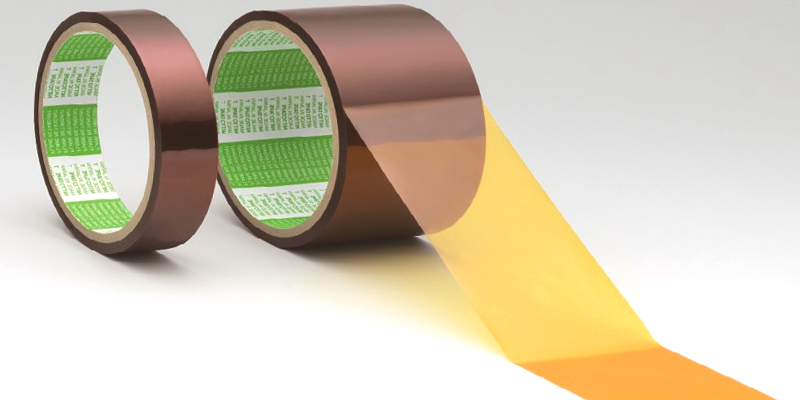
Polyimide films (Kapton®, Apical®, UPILEX®)
-
Ceramic‑coated films
-
Mica (for dielectric + thermal)
-
Dielectric laminates
-
Low‑outgassing dielectric adhesives & films (for aerospace/space)
Here are a few of the industry-leading material manufacturers we've worked with over the years:
We also work with customer-supplied material. If you have material that you need converted, please reach out to your sales representative or contact us for additional information.








ASK AN ENGINEER: Thermal Management Application Q&A’s
Die-cut thermal management materials help prevent thermal runaway and manage hotspots in EV systems by eliminating air gaps, dissipating heat in targeted hotspots such as busbars and connectors, and preventing heat transfer between cells in the battery pack.
JBC converts a wide range of engineered thermal materials, including flexible graphite heat spreaders, thermal gap pads and interface materials (TIMs), metal and polymer foils, polyimide and ceramic-based insulators, and high-performance thermal insulation materials such as aerogels and nonwovens. These materials can be supplied as single layers or combined into custom, multi-layer die-cut assemblies based on application requirements.
Each thermal material solves a different problem. Flexible graphite provides excellent in-plane heat spreading in very thin profiles, but is less compliant. Gap pads conform well to uneven surfaces but are thicker and softer. Foils offer high thermal conductivity and shielding but typically require added electrical insulation. Aerogels and ceramic insulators block heat transfer effectively but require specialized converting methods. JBC helps customers select materials that balance thermal performance, space constraints, durability, and manufacturability.
Thermal materials can be brittle, compressible, dusty, or difficult to laminate, making them challenging to process consistently. Tight tolerances, adhesive compatibility, and material handling are common concerns. JBC addresses these challenges through material-specific die design, controlled lamination processes, advanced converting equipment, and Design for Manufacturing (DFM) support to ensure reliable, repeatable production.
Multi-layer laminations allow thermal management, electrical insulation, and mechanical attachment to be combined into a single die-cut component. For example, a heat spreading layer can be laminated to an electrical insulator and pressure-sensitive adhesive, reducing part count, simplifying assembly, and improving reliability versus multi-piece solutions.
JBC supports ultra-thin materials through thick, compressible constructions, with tolerances tailored to material behavior and application needs. Our capabilities range from small, high-precision electronic components to large-format thermal and shielding parts, including complex geometries, internal features, liners, and presentation formats for manual or automated assembly.
JBC brings together deep material science expertise, advanced converting technologies, and ISO 9001:2015 certified manufacturing. As a preferred converter for leading material suppliers, JBC provides more than cut parts; delivering engineering collaboration, scalable production, and application-specific solutions that help customers manage heat, improve reliability, and accelerate time to market.
JBC's rapid prototyping services allow you to test different materials and part designs quickly with no tooling investment needed. Powered by our digital cutting capabilities, we can help you quickly test different thermal management materials, ensuring you select the right one before moving forward with high-volume manufacturing.
The result? A quick and cost-effective way to test materials and go to market with confidence.
While JBC has extensive relationships with industry-leading thermal management material suppliers, we also commonly accommodate customer-supplied materials.
Yes, we provide custom kitting services for thermal management components in complex assemblies as part of our foundational commitment to supply chain optimization.
Yes, JBC leverages our in-line multi-layer laminating capabilities to create multi-functional components that solve challenges like thermal management, acoustic damping, and sealing in one small footprint. This creates a high-performance thermal management solution that solves multiple challenges in small, constrained spaces.
Solving Thermal Challenges in Electronics:
Your Guide to Tackling Thermal Management with Custom Converting
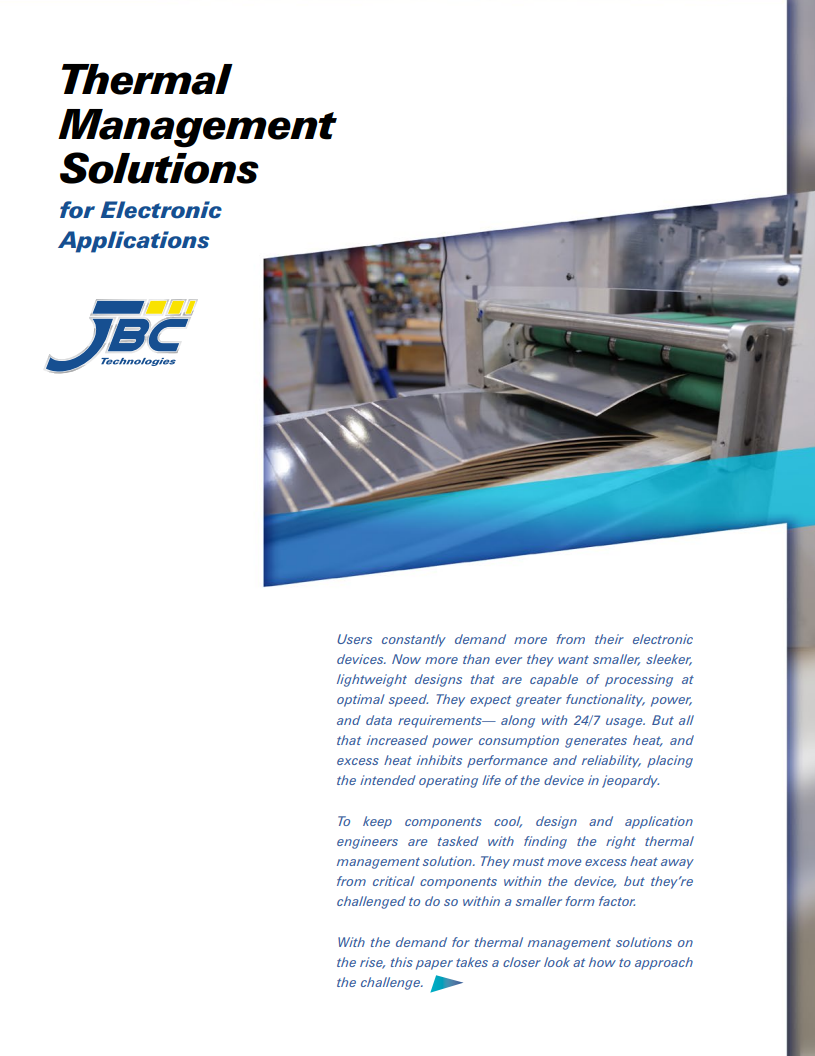
In this helpful E-Guide, Thermal Management Solutions for Electronics Applications, we take a look at how various die-cut flexible materials help spread, shield, and isolate unwanted heat in different electronics applications. This guide answers critical questions like:
- How is thermal management done?
- What important factors should I be considering?
- What are the most common thermal management materials? When should I or shouldn't I use them?
Related Thermal Management Materials

Performance Materials for Passive EV Battery Thermal Management

There is no one-size-fits-all solution to passive thermal management in EV batteries. Whether your goal is to insulate, spread, or shield heat, working with a converting partner is the key to engineering the perfect custom solution for your battery project. In this whitepaper, we highlight the different ways die-cut flexible materials solve passive thermal management challenges in and around the battery pack, helping increase battery safety, longevity, and performance.

Using Converting & Material Science to Mitigate Thermal Runaway in EV Batteries
Effective thermal management goes beyond simply maintaining uniform heat levels, it requires utilizing proper high-performance materials specifically engineered to mitigate thermal runaway between battery cells. In this Q&A featuring 3M material experts, we discuss how custom-converted thermal management materials enhance vehicle safety and consumer experience, all while reducing weight.
Frequently Asked Questions NeoGraf Solutions Flexible Graphite
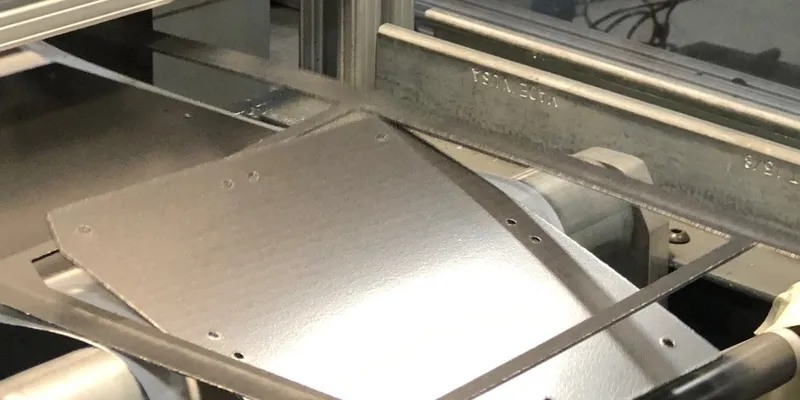
NeoGraf eGraf® products are engineered for lightweight, cost-effective and efficient heat spreading. JBC Technologies uses custom die cutting and lamination to convert these specialized flexible graphite materials into custom components and multi-material stack-ups designed to help manufacturers with their thermal management and heat-spreading applications. Read our FAQ page to learn more about flexible graphite solutions.
Frequently Asked Questions EST™ Compression Papers
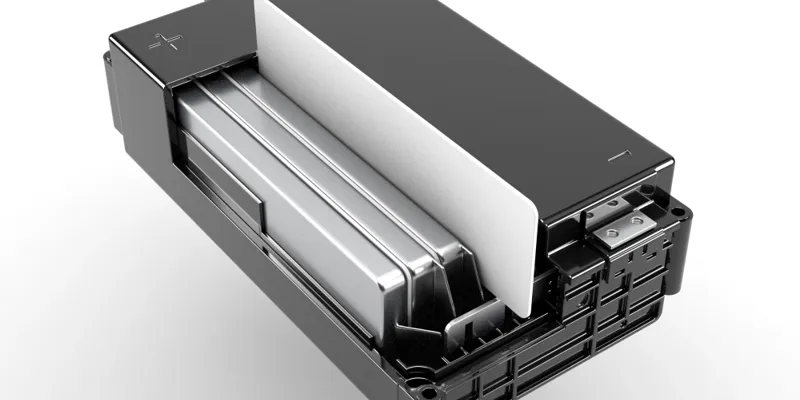
EST™ Compression Papers from Morgan Advanced Materials are designed to accommodate the cyclical expansion experienced by the pouch and prismatic battery cells during the routine operation of an electric vehicle. Learn more by reading this FAQ (and answer) page.

Frequently Asked Questions TABshield
TABshield from JBC Technologies is a lightweight thermal and acoustic insulation product that serves as an alternative (and sometimes enhancement) to traditional metal heat shielding. It's easy to install, conformable to most shapes, and an ideal solution for various targeted noise and heat suppression applications. Find answers to frequently asked questions here.
Start Isolating, Insulating, Spreading, and Shielding Heat Today!
If you're looking for a lightweight, high-performance, and assembly-efficient way to solve thermal management challenges, we'd love to help...
Founded on the pillars of engineering innovation, manufacturing excellence, and supply chain optimization, JBC Technologies provides custom die-cut thermal management solutions optimized to isolate, insulate, spread, and shield heat across a wide variety of industry applications. Leveraging our advanced converting capabilities, process engineering expertise, and relationships with industry-leading thermal management material manufacturers, we support your NPI initiatives to get your components to market more quickly and cost-effectively.