
Engineering Innovation for Die Cutting & Material Converting Services
Getting a precision die-cut component from concept to production involves far more than cutting material to shape. It requires deep material knowledge, design expertise, and a manufacturing partner who engages early, asks the right questions, and brings solutions you may not have considered. As a premier flexible materials converter, for JBC Technologies, engineering innovation and support is not an add-on — it is built into how we work.
BRIDGING THE GAP FROM DESIGN INTENT TO MANUFACTURING REALITY

- "We need to move fast" — Timelines are aggressive, and prototype iterations need to happen in days, not weeks
- "We need help with material selection." — The range of available materials is vast. Guidance from someone who works across industries and applications every day is invaluable
- We need to optimize without compromising." — Whether the goal is reducing weight, cutting cost, or improving performance, the solution has to meet the full performance envelope
- "We need documentation and traceability" — Regulated industries and demanding applications require complete records, not just good parts
THESE ARE THE TYPES OF CHALLENGES WE are PURPOSE-BUILT TO ADDRESS Engineering Die‑Cut Components for Manufacturability and Scale
Here’s how:

Agile Responsiveness
JBC Technologies delivers agile engineering support that enables rapid iteration without compromising downstream scalability. We work engineer‑to‑engineer, communicating quickly and clearly to collaborate on material selection, tolerance strategy, and design‑for‑manufacturability—using dieless and low cost tooling prototypes engineered around rotary and platen die cutting constraints, web direction, and process capability.
Material Selection Assistance
It’s never too early to get our team involved in your project. We are here to help you through the product development stage by offering recommendations for materials, helping you validate proof of concept with rapid prototypes made from our digital cutting machines, or designing an automated assembly solution.
Design for Manufacturability Recommendations
A design that looks good on paper doesn’t always translate to efficient production. JBC’s engineers evaluate your design through a manufacturing lens—simplifying geometry, improving yield, reducing waste, and optimizing part presentation for assembly. The result is a part that performs as intended and can be produced reliably and cost‑effectively at scale. By engaging early and working directly with your team, we provide fast, iterative feedback on materials, tolerances, and design features—when changes are easiest and least expensive.

Rapid Prototyping
JBC Technologies offers fast, reliable prototyping as a critical step in project success, accepting most standard CAD formats (STEP preferred for 3D; DXF/DWG for 2D). Dedicated capacity on our dieless digital cutting platforms enables quick-turn prototypes that can replicate many production-level features, with approaches tailored to material requirements. By involving a die cutting process engineer during the prototype phase, we can provide design-for-manufacturability guidance on materials, feature geometry, tolerances, and part layout—helping designs align with high-volume converting processes.

Part Presentation & Product Delivery Systems
Optimizing part presentation maximizes material yield and accelerates assembly—reducing unit costs while streamlining production line integration. Examples of solutions delivered by the JBC engineering team include part rotation, pull-tabs, gapped parts, kiss-cutting, and custom dispenser units
Cross-Industry Technology Transfer
Another great reason to engage with JBC early in your design process is that we have the benefit of exposure to a variety of disparate industries and markets. This diverse industry exposure puts us in the position to discover innovative products and best practices from one field and apply them to your applications. For example, a material or compound designed to mitigate noise or provide a thermal barrier for the automotive industry may be a perfect solution for a home appliance. The reverse could also be true. Our technical support team recognizes these opportunities to provide cost savings, better performance, and other benefits that add value to your project.

Automated Assembly
Are you taking the small die cut part that we fabricate and ship to you, and then manually adding it to another small part before shipping it off for final assembly – or worse yet, sending it off to a third-party provider for manual assembly? Let JBC automate the process, shorten your supply chain, and free up your workers for higher-value projects. Our engineering team has designed and built custom automation systems that have saved our customers hundreds of hours of manual labor.

Value Analysis/ Value Engineering
For products already in production, there is almost always room to improve. VA/VE is a structured process of examining a part, its materials, and how it moves through your production system to identify meaningful opportunities for improvement. Changes to part geometry, material substitution, delivery format, and assembly presentation can reduce cost, improve quality, and eliminate waste at multiple points in your value chain. We work directly with your team to find and validate these opportunities.
Read Success Stories
At JBC, we know that the day the parts leave our facility is just the beginning of another step in the manufacturing process. That’s why we make a point to dig deep to better understand how our parts are being used on your production line. The more we know, the better. We can offer recommendations that will reduce waste at the next step of the value chain—ensuring that parts are deployed as efficiently as possible into your product or system.
Simplifying Your Supply Chain

In this case study, we share two scenarios where JBC Technologies provided value that eliminated additional time and cost consequences that the customers would have incurred otherwise.
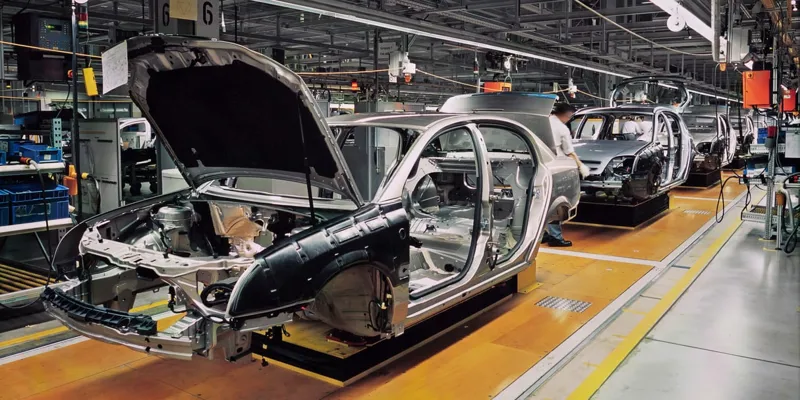
Solution for an Automotive Company
In this case study, we share how JBC Technologies provided technical engineering support that resulted in a permanent solution to a systemic problem for an automotive company.
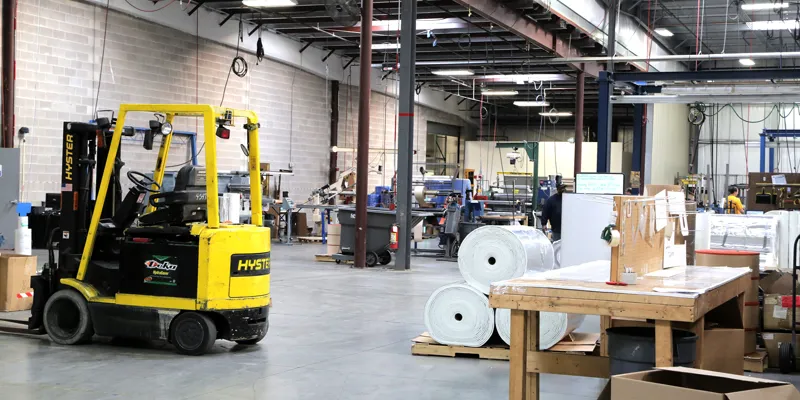
Solving Supply Chain Ineffciencies
In this case study, we share how JBC Technologies helped one customer solve supply chain inefficiencies by establishing a local presence.
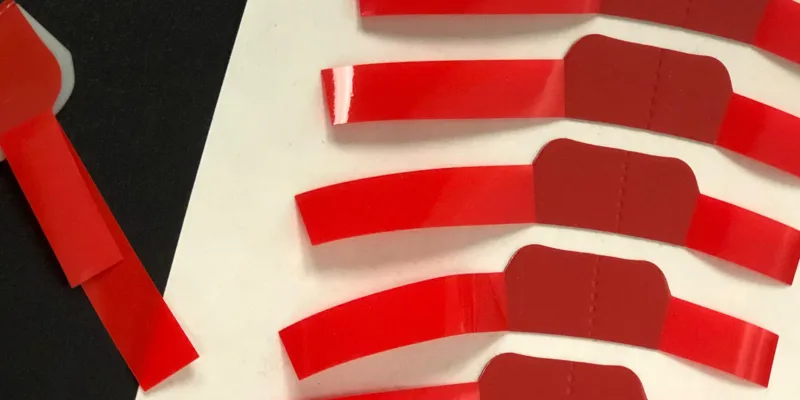
JBC's Responsiveness & Innovation
In this case study, we share how the JBC Technologies team was able to provide a leading luxury car manufacturer with a quick, innovative fix to a last minute production challenge.
“JBC has always met our engineering requests with an open mind. They provide several options, quotes, and samples in a timely manner and when we need technical support they are responsive and willing to help.”
Answers to Questions Team JBC Hears Often
At JBC, our engineering team gets involved much earlier and sticks with the project all the way through. We’ll look over CAD files, materials, tolerances, and how the part will be presented before anything hits the press. In real terms, that might mean tweaking a feature so that it runs better on a rotary press, adjusting a laminate stack to boost yield, or changing the liner so it feeds smoothly into your automation. The payoff is usually lower cost, smoother production, and fewer surprises once everything goes live.
Because many of the biggest cost and manufacturability decisions get locked in early, often without realizing it. When a die‑cutting engineer is involved up front, we can help guide material selection, feature geometry, tolerances, and part layout so the design naturally aligns with high‑volume converting processes. This avoids painful redesigns later and helps ensure the part scales cleanly from prototype to production. Early involvement almost always means faster launches and fewer compromises down the road.
At JBC Technologies, we design prototypes with the end process in mind. Laser or digital cutting lets us move fast early, but we’re already thinking about web direction, part spacing, material behavior, and tooling constraints that come with rotary die cutting. As designs stabilize, we transition into press‑ready formats, validate tooling concepts through trials, and dial in process parameters before full production. That way, scaling up isn’t a leap; it’s more of a controlled handoff.
Yield optimization is a mix of material science and process engineering. We look at nesting efficiency, web width utilization, adhesive coverage, kiss‑cut depth, and even how the material behaves under tension. In many cases, small changes, such as rotating the part, adjusting spacing, or changing liner construction, can significantly reduce scrap. Our engineers actively iterate layouts and processes to squeeze as much value as possible from high‑cost materials.
We start by understanding your process: volume, takt time, labor constraints, and quality requirements. From there, we evaluate whether features like pull tabs, extended‑release liners, kitting, or part orientation could simplify handling or enable automation. If automation makes sense, we design the part and its presentation to support it. If it doesn’t, we’ll tell you that too. The goal is practical automation, not automation for its own sake.
Collaboration is key. We regularly review customer equipment constraints, feeding mechanisms, and handling requirements, then iterate part presentation through trials and samples. This might involve adjusting liner splits, adding tabs, changing roll orientation, or modifying packaging. We don’t design in a vacuum; part presentation is validated against real‑world automation, not just theoretical best practices.
Common levers include revisiting part geometry, tightening tolerances where it matters (and loosening them where it doesn’t), optimizing web direction, and reconsidering liner and adhesive coverage. Sometimes it’s as simple as changing how parts are nested; other times it involves a more fundamental process change. Our engineers look at yield holistically; material, tooling, and process all together.
We support the entire lifecycle. Early on, we provide fast, low‑tooling prototypes to validate form, fit, and function. As volumes grow, we layer in process development, tooling refinement, and production trials to eliminate risk before launch. Because the same engineering team stays involved, lessons learned during prototyping carry straight into high‑volume manufacturing.
It usually starts with engineers talking to engineers. We review your concept, understand the functional requirements, and ask questions about how the part will ultimately be built and assembled. From there, we offer feedback on materials, design features, tolerances, and part presentation—often through several quick iterations. The goal is to shape the design while changes are still easy and inexpensive.
At JBC Technologies, we regularly apply solutions proven in one industry to challenges in another. For example, automated part presentation techniques developed for high‑volume automotive programs have been adapted for medical and aerospace applications, where consistency and precision are critical. Likewise, advanced lamination and material stacking approaches used in thermal management have been repurposed for acoustic and insulation applications. This cross‑pollination helps customers benefit from innovations outside their immediate industry.
On Demand Cost Out and VA/VE Webinar
This webinar, led by VA/VE expert, Six Sigma Black Belt, and JBC President, Brad Patt, will provide you with the means to increase profitability and achieve maximum value on existing parts or products. By means of relatable examples that Brad has used successfully not only as Director of Operations and President at JBC, but also consulting with multiple Fortune 500 companies, you’ll learn how to maximize outcomes by focusing on the entire process, from pre-work to the VA/VE event itself.
JBC: A Die-Cutting Company that Emphasizes Engineering Excellence
When you have challenges, we provide options. Our experts specialize in finding new materials or design solutions that solve issues unique to your application. Submit your project today to have our experts find a solution that makes sense for your specific needs and your budget.