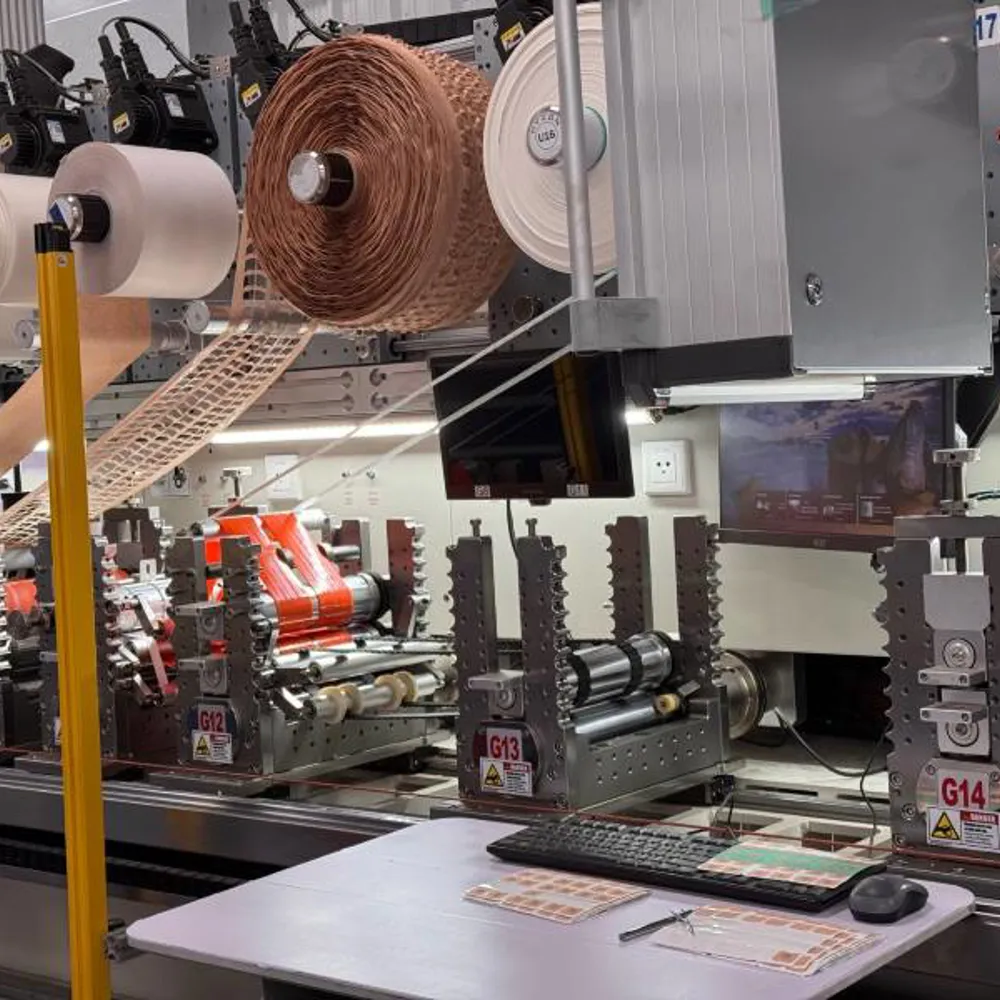
Complex Multi-Layer Laminating Services
Regardless of the industry or end application, multi-layer laminates solve a myriad of universal engineering constraints, including space, weight, durability, sku reduction, and assembly speed. The simple addition of a pressure-sensitive adhesive to a foam gasket or seal can turn a complex installation into a simple "peel-and-stick" process. The marriage of two complementary but different materials can turn a single-function part into one that is multifunctional. And, when done inline as part of a precision die-cutting process, it can be used to create complex, multi-layered parts and products in a single pass.
Advanced Roll-to-Roll Lamination
Beyond Simple Bonding
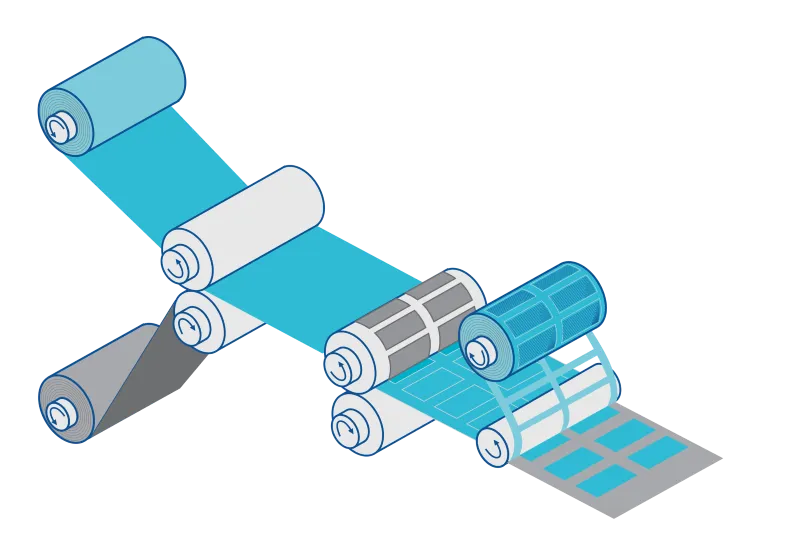
In the world of advanced converting, lamination is no longer just about sticking layer A to layer B, or even layer C. By integrating value-add features directly into the lamination pass, premier flexible material converters like JBC Technologies can add value added features and reduce the number of secondary processes needed to produce the finished product, increasing throughput and lowering the "Total Cost to Quality."
Island Placement
Island placement is a converting technique where a small, precise piece of material (the "island") is cut and placed onto a larger, continuously moving strip of material, which is then cut into the finished part or product.
Example Applications:
-
Band-Aids (the cotton gauze in the middle)
-
Screen/speaker dust seals
-
Heart rate monitor electrodes
Zone Coating
The term zone coating describes the process of applying adhesive only to specific areas during lamination.
Example Applications:
-
Microfluidics / micro capillary channels on diagnostic strips
-
Foam seals with adhesive on only one edge
Adhesive Deadening
Deadening refers to the process of applying a specific coating designed to "kill" the adhesive in certain areas of the part .
Example Applications:
-
Deadening adhesive in an overlay patch so as not to stick to a sensor or other component.
-
"Killing" the adhesive in the center of a circular gasket
Finger Lift / Pull Tabs
Adding an oversized liner or a non-stick "pull tab" (piece of liner with the adhesive backing removed)
Example Applications:
-
Easy-peel wearable adhesive patches
-
Automotive interior and exterior attachment tapes
Inline Surface Treatment
Inline surface treatment is done using a Corona or plasma treating machine to shock or treat the surface of the material to change the surface energy and improve bonding.
Example Applications:
-
Seals
Back Scoring
Back scoring is used to make shallow cuts that go through the backing paper, not the actual product. The process creates a "crack and peel" effect for easier part or product removal from the liner.
Example Applications:
-
Large pain-relief patches
-
Large-format foam gaskets
Multi-Web Rotary Laminating
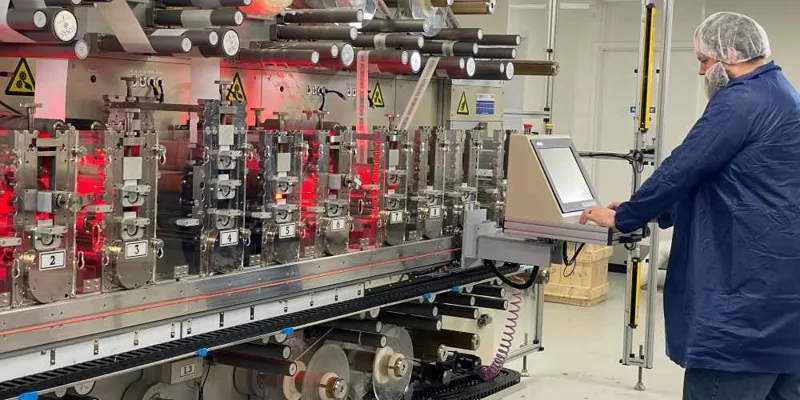
With a large stable of multi-station rotary presses ranging from 5 to 18 stations, we're capable of making high volumes of extremely complex parts using one-pass assembly. By performing lamination in-line with die-cutting, we yield intricate, multi-layered, finished components, eliminating the need for secondary processing once it leaves our presses.
Wide Web Laminating
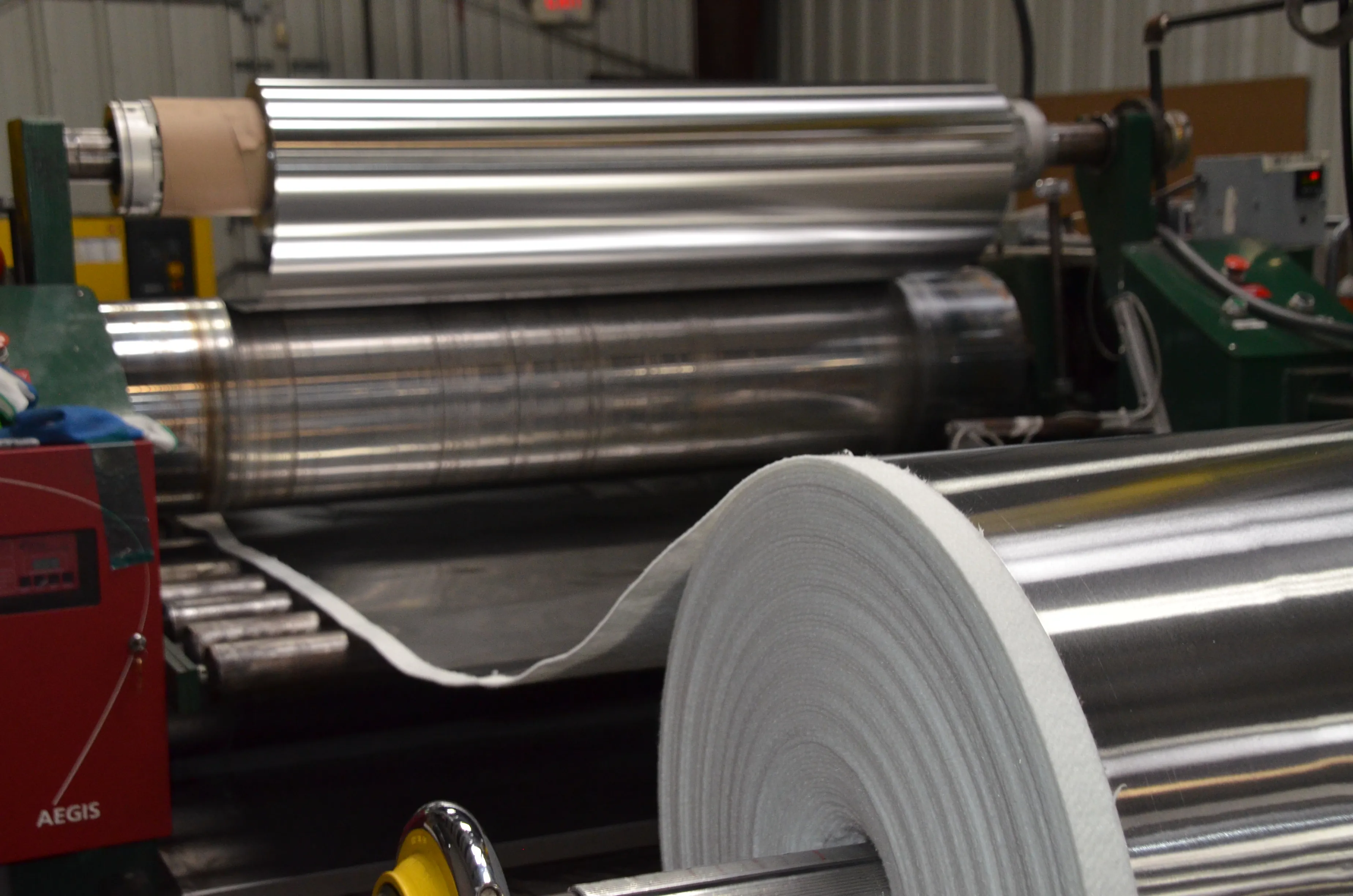
Our hot and cold wide web laminating machines provide a breadth of options for layering materials together, up to 74” wide. This high-capacity setup ensures uniform bubble-free bonding across large surface areas to support high-volume production runs.
PROCESS ENGINEERING
For Repeatable results
To those unfamiliar with the converting industry, it might seem simple to marry one adhesive-backed material to another, assuming you have the appropriate equipment. It’s easy to make a sample lab prototype, right? While that may be true, high-volume production is a much different ballgame than manual or semi-automated prototyping. Someone wise once said, “If you don't design for the machine, the machine will eventually design a failure for you.”
At JBC, we take a process engineering-focused approach to everything we do. When it comes to lamination, that can take many different forms:
________________________


Ask An Engineer: Laminating FAQ's
Island placement works by keeping web tension steady, using servo-driven equipment, and building tooling that naturally keeps everything lined up. It’s not just about running fast; it’s about making sure adhesive placement, liner handling, and die cutting all stay in sync as the web moves.
Thin films tend to stretch, wrinkle, and shift; that’s really the tricky part. They don’t respond well to off tension settings or liners that aren’t consistent. That’s why having in‑house laminating and process engineering makes such a difference. We can dial in tension, pick the right liner, and even add surface treatments when needed so the film behaves during placement.
Zone coating lets you put adhesive only where it actually helps. That means less waste, better compressibility (especially with foams), easier assembly, and lower cost. It’s really about getting the best performance out of the material, not just cutting cost. We use zone coating a lot when fully coating a material would hold it back.
Yep, that’s usually how it’s done. You can put PSAs down in specific areas during laminating, either with patterned adhesive or by controlling the transfer. It really just comes down to having the right tooling and good process control, which is why doing it in‑house makes such a difference.
Use deadening when you don’t want the adhesive to stick in certain spots. Zone coating means there’s no adhesive applied in those areas at all. Deadening means the adhesive is there, but it’s purposely neutralized. It’s helpful when you need full‑web adhesive for processing, but still want certain areas to release cleanly or stay non‑tacky for assembly or function.
Hot roll laminating basically gives you better flow and stronger, more consistent bonds. The added heat helps adhesives wet out properly, especially on low‑surface‑energy materials, thicker builds, or anything that needs a bit more performance. It’s also great when working with heat‑activated adhesives. We turn to hot‑roll lamination anytime cold pressure alone isn’t enough to deliver a reliable, repeatable bond.
Common deadening materials include release liners, silicone‑coated films, and specialty deadening coatings. Basically, they keep the adhesive from sticking where it shouldn’t, without affecting the rest of the part.
Extended liner means there’s extra liner beyond the edge of the part, which just makes it easier to grab and place. A shingled tab is when parts slightly overlap on the liner so pulling one tab automatically exposes the next.
If it’s set up the right way, it shouldn’t cause any issues. We place pull tabs outside the main bonding areas or in spots where they won’t interfere with how the part works. When they’re designed well, they make things easier to use without hurting performance. Issues usually come from poorly placed tabs; good converting prevents that.
If a material doesn’t want to stick, that’s usually your sign. Low‑surface‑energy materials, like certain films, foams, and silicones, often need a little help. Corona and plasma treatments both boost surface energy; the right one depends on the material and how strong of a bond you need. We use surface treatment when standard laminating isn’t quite enough.
Not forever. The effect of surface treatment wears off over time, which is why we usually treat right before or during laminating. If it’s done too early, the benefit fades before you even get to bonding.
Yes, as long as things are set up right. You can back‑score PET liners, but it takes tighter control and the right tooling since PET doesn’t act like paper. This is one of those areas where having experience and solid in‑house process control really makes a difference.
Accelerating Speed-to-Scale With Advanced Laminating
At JBC, we believe that 1+1=3 when it comes to custom materials converting. By leveraging our process engineering expertise and a wide range of vertically integrated in-line and wide-web laminating capabilities, we’re able to create multi-functional finished components that are more than the sum of their parts, for a quick and efficient scalable production line.
Interested in learning more about how our value-added 1+1=3 approach helps our customers scale their production?