
Nutraceutical Transdermal Patch Die-Cutting and Contract Manufacturing
JBC Technologies is a Solventum Premier Converter of custom die‑cut transdermal tapes and stick‑to‑skin active and passive delivery components. We convert medical‑grade, skin‑safe adhesive materials into transdermal nutraceutical patch solutions engineered for high‑volume manufacturing.
ISO 13485 certified and operating within multiple cleanroom converting environments, JBC Technologies maintains controlled, repeatable processes for both manufacturing and packaging. We deliver over‑the‑counter transdermal tape products in retail‑ready formats, ensuring quality, traceability, and consistency across every stage of production.

ISO 13485 Certified Transdermal Tapes and Active Delivery Components
Transdermal tapes are more than just sticky carriers...
They are the engineered multi-layer interface between a patient and their treatment. Here at JBC Technologies, we specialize in converting high-performance biocompatible materials infused with active or passive ingredients into custom nutraceutical patches that ensure reliable adhesion and skin-safe performance.
Working with our expert adhesive providers and leveraging our state of the art converting capabilities, JBC can support wellness patch solutions including:
-
Nutraceutical and Vitamin Delivery Patches
-
Essential Oil Therapy Patches
-
Performance and Energy Patches
-
Hangover and Recovery Patches
-
Acne Patches
-
CBD Patches
-
Sleep and Relaxation Aid
Solving the Challenges of
Stick-to-Skin Functional Delivery Components
To develop a successful transdermal delivery system, you need a manufacturing partner who can take a complex multi-layered stack up and make it manufacturable and repeatable at scale. JBC leverages engineering innovation, manufacturing excellence, and supply chain optimization to address many of the challenges involved with multi-layered skin-contact nutraceutical tapes:
The Challenge: |
The Solution: |
|
|---|---|---|
Balancing MVTR and Skin Maceration |
Most ingredient delivery tapes are designed to be worn anywhere from 8-72 hours, including during exercise and bathing. While being “occlusive” is a critical performance feature, if a tape is too occlusive, it can cause moisture to build underneath the patch, leading to skin maceration and patch failure. |
By leveraging JBC’s digital cutting capabilities, we can help you conduct real-world wear tests to ensure the materials you’ve specified successfully balance these two requirements. Our rapid prototyping services are a low-cost, quick way to validate fit, form, and function for consumer wellness nutraceutical tapes. |
Avoiding Ingredient Leaks |
For reservoir-style patches that include sections of liquid ingredients, an improper seal can cause the formulation to leak out of the side of the patch or allow contaminants to enter, all of which can compromise the product’s shelf life. |
JBC leverages our inline island placement capabilities to ensure a precise, tight-tolerance seal around all edges of the patch. Our AI-driven inline vision systems also catch any imperfections in the component stack-up, preventing compromised patches from leaving the production line. |
Preventing Skin irritation |
Nutracuetical patches must remain adhered through exercise, sweat, and sleep, requiring a strong adhesive bond. However, if an adhesive is too aggressive, it can cause skin irritation and damage upon removal. Balancing lasting skin-contact adhesion with non-traumatic removal is a key performance metric. |
Through JBC’s relationships with industry-leading medical-grade adhesive manufacturers, JBC has expertise in sourcing and acquiring samples of special high-performance skin-contact adhesives optimized for lasting adhesion and safe removal. |
Combining Dissimilar Patch Materials |
Transdermal tapes are typically made up of multiple dissimilar performance materials sandwiched together into a single component. Secondary lamination processes can create opportunities for air entrapment, leading to inconsistent ingredient delivery or overall patch failure. |
JBC helps eliminate this risk through our multi-station in-line laminating capabilities, allowing us to laminate and die-cut all in one machine pass – no need for secondary lamination. This “one-pass-approach" eliminates the chance of air entrapment and improves production throughput to yield thousands of identical, functional components. |
The Anatomy of an Ingredient Delivery Tape
As die-cutting experts, it isn’t our job to dictate the design or material stack-up of your nutraceutical product; it’s our job to apply our process engineering expertise to the manufacturing process to ensure your product is manufacturable and scalable. However, translating transdermal product concepts into manufacturable final products requires an understanding of the greater material stack-up.
Let’s break down what makes up a transdermal tape:

The Chemically Inert Liner
Transdermal tape liners play a critical role in preserving the potency of active/passive ingredients. These liners must be chemically inert, so they don’t interact with the passive/active ingredients on the adhesive.
They also require a constant peel force to ensure the liner peels away cleanly without leaving any active/passive ingredients on the discarded liner.
Key Performance Metrics:
-
Chemical Inertness to prevent ingredient interaction
-
Consistent Peel Force to prevent damage to the infused adhesive when peeled

The Ingredient-Infused Adhesive
Also referred to as the “reservoir”, transdermal adhesives must hold and deliver active/passive ingredients while staying evenly adhered to the skin for anywhere between 6-12 hours.
Because transdermal patch products can be placed in very different areas of the body, adhesive requirements will differ by application. Products placed on the face will have different adhesion requirements than those placed elsewhere on the body.
Key Performance Metrics:
-
Moisture Vapor Transmission Rate (MVTR) to prevent skin maceration and delamination
-
Gentle Peel Adhesion to prevent damage to the skin upon removal

The Rate Controlling Film
Many transdermal products feature a semipermeable membrane that sits either before or after the adhesive in the material stack-up, depending on the design of the transdermal patch.
Commonly made of EVA or Polyethylene films, these “gatekeeping” layers help control the flow of active ingredients into the skin, ensuring the patient receives a steady flow rather than all of the medication at once.
Key Performance Metrics:
-
Uniform Thickness to ensure even ingredient flow across the entire surface of the delivery area
-
Pore Size to optimize the resistance or speed at which the ingredients travel through the membrane

The Breathable Carrier
Transdermal tape carriers provide the outer barrier to prevent the ingredients inside from evaporating outward or being rubbed off by clothing.
These carriers must also remain flexible enough to move with the mechanics of typical body movement, and breathable enough to release trapped moisture underneath the patch, preventing skin maceration.
Key Performance Metrics:
-
High Moisture-Vapor Transmission Rate to prevent skin maceration and product failure
-
Occlusivity to create a total seal to prevent ingredients from seeping out
Our Material Partners
Here are just a few of the many industry-leading medical-grade material manufacturers we work with:
We also work with customer-supplied material. If you have material that you need converted, please reach out to your sales representative or contact us for additional information.





Essential Capabilities for Nutraceutical Tape Manufacturing
These are some of the capabilities that make up our transdermal tape converting toolkit...

Rapid Prototyping

Powered by our digital cutting capabilities, JBC's rapid prototyping services are an excellent resource for design engineers looking to quickly and cost-effectively test different materials or validate proof of concept for die-cut components.
Our digital cutting machines can quickly produce parts that would normally be die cut, taking them from CAD drawing to finished part in seconds with no tooling required. In higher-risk industries like the aerospace, medical, and consumer wellness space, this is an important step for validating the fit, form, and function of mission-critical components.

Complex Multi-Layer Laminating Services
JBC Technologies offers a full range of laminating services, including hot lamination, cold pressure lamination — both inline, and wide web. This gives our process engineers the flexibility to choose the right process for material, application, production volume, and value.
From bonding a pressure-sensitive adhesive to a foam gasket to marrying two complementary materials into one multifunctional component, we help you simplify your supply chain, reduce SKUs, and streamline your assembly process.
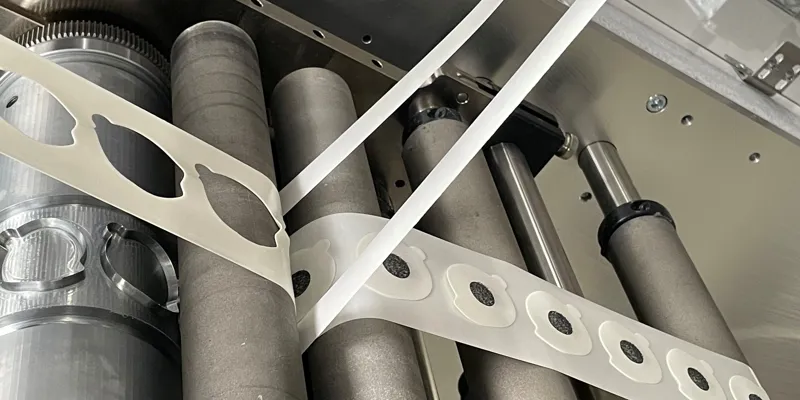
High-Volume Rotary Die-Cutting
JBC's fleet of multi-spindle rotary die-cutting machines is a core part of our commitment to manufacturing excellence, allowing us to fabricate thousands of dimensionally identical multi-layered components repeatably at high-speeds.
With machines ranging from 5-18 stations and a variety of inline capabilities like laminating, printing, ultrasonic welding, island placement, and more, our rotary die-cutting capabilities are critical to our "one-pass-approach" to manufacturing, helping us get more done in a single machine pass.
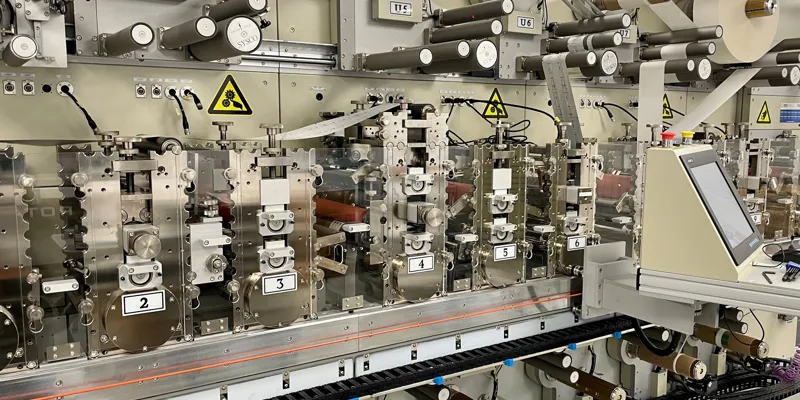
ISO 13485 Certified Cleanroom Die-Cutting
JBC is home to multiple ISO 8 / Class 100,000 Certified cleanroom manufacturing environments, each featuring high-volume rotary die-cutting and flexible materials converting equipment.
Our clean rooms have been carefully designed to meet the strict standards and quality requirements of the highly specialized industries that require that their parts be made in a low air particulate, temperature- and humidity-controlled, and sanitary environment, like the medical, consumer wellness, aerospace, and electronics industries.
Answers to Commonly Asked Transdermal Tape Questions
With multiple facilities in the United States, JBC Technologies is a proud domestic source of nutraceutical tapes and transdermal patches. Working with a domestic die-cutting partner like JBC is a key way to boost supply chain responsiveness, mitigate tariff impacts, and improve go-to-market speeds.
JBC leverages our many relationships with leading medical-grade material suppliers to get the most up-to-date information on adhesive performance and limitations straight from the source. Armed with this information, we’re able to help you source and test adhesives that won’t interact with the specific active wellness formulation in your transdermal patch stack-up
Yes, JBC’s inline island placement allows us to strategically place zones/layers of active/passive materials within a larger transdermal patch stack-up. Completed on our multi-spindle rotary die-cutting presses, this strategic placement ensures that the active/passive ingredients are only located in the specific area where treatment is needed, all in one machine pass.
The classification of a transdermal patch depends on the intended use of the product and the ingredients present in it.
Wellness & General Health Tapes (non-medical): Patches intended for general wellness applications like vitamin delivery, topical skin health, or sleep aid, that do NOT cure, prevent, or treat a disease are not considered medical devices.
Medical Transdermal Tapes: When patches are marketed to treat, cure, or prevent a disease, or contain regulated pharmaceuticals, they typically fall under FDA-registered medical device classification.
JBC understands the science behind stick-to-skin adhesion, helping you source adhesives with the right tack and moisture vapor transmission rate to stay adhered during sweat-inducing exercise.
We have longstanding relationships with many of the leading medical-grade adhesive suppliers, granting us access to a wide range of stick-to-skin materials for you to sample and test.
By communicating clearly with the formulation manufacturer and utilizing established industry standards, we make sure each material formulation is converted, handled, and packaged in a controlled, repeatable way, guaranteeing its validated performance is preserved all the way through production and distribution.
Consistency comes from process control and material traceability. We lock in the converting process (IQ/OQ/PQ where required), maintain tight lot-to-lot traceability back to the master roll, and run in controlled environments so nothing changes unexpectedly once you scale.
Here at JBC, we don't manufacture tape or formulate adhesives. We partner with leading medical-grade material suppliers and manage a robust, proven supply chain. Our expertise is in converting those materials we source into finished transdermal tape and wearable device products that are manufacturable, scalable, and consistently high quality.
With transdermal tapes and most other die-cut products/components, there isn’t a one-size-fits-all MOQ. It typically depends on a combination of the material, processing required, and what stage you're at in the product lifecycle. We routinely support early-stage builds via rapid prototyping and then scale into higher volume production once the design is locked in, so we try to stay flexible rather than forcing a hard minimum.
Your Partner for Scalable Transdermal Patch Manufacturing
As an ISO 13485 Certified medical die-cutter and converter, JBC Technologies has the process engineering expertise and experience converting medical-grade materials necessary to provide high-volume transdermal tape solutions. Our commitment to supply chain innovation, engineering innovation, and manufacturing excellence is all part of what makes us an efficient transdermal patch manufacturing partner.
Are you looking for a manufacturing partner to help you launch your next transdermal tape product?